
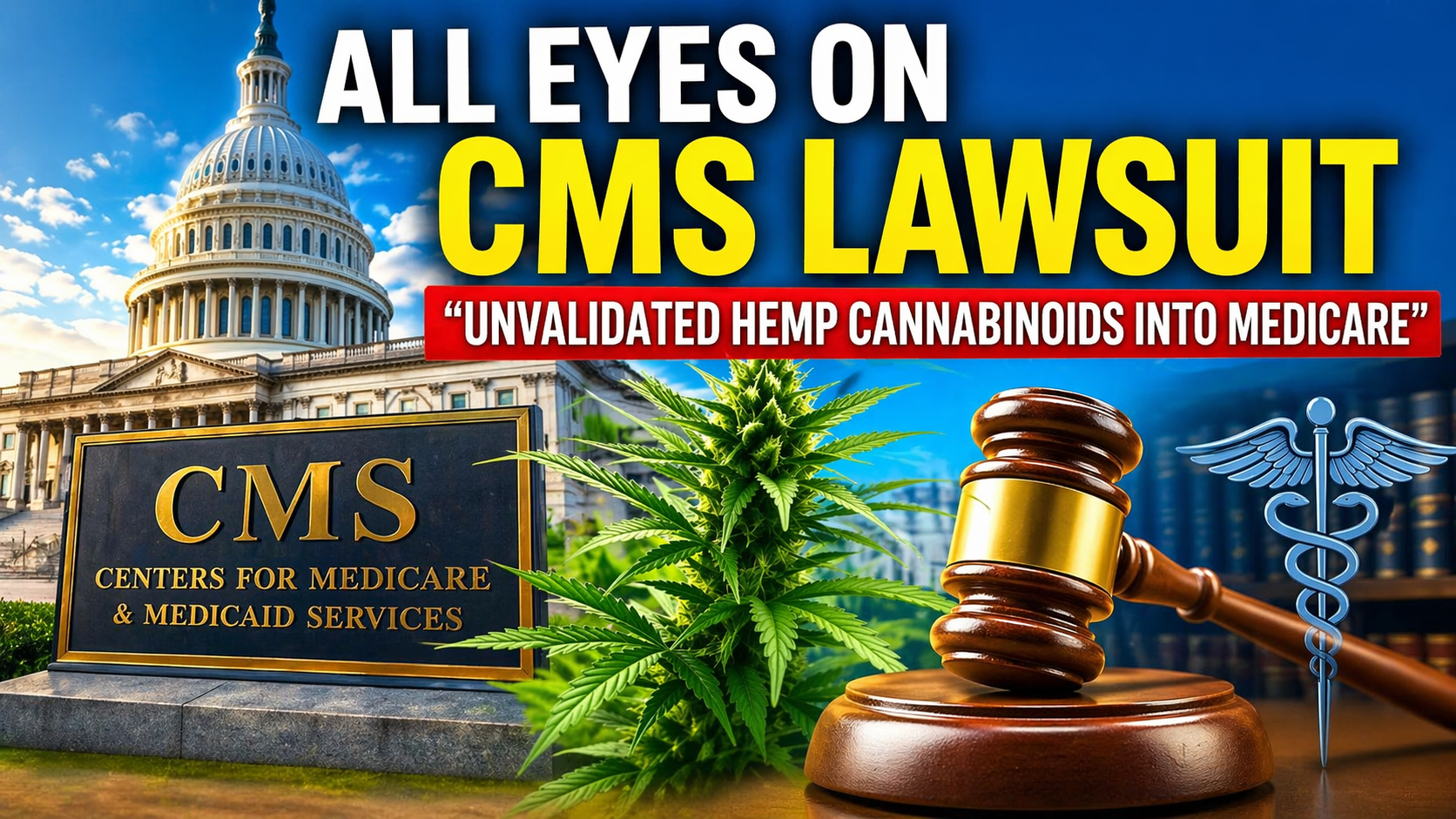
ALL EYES ON CMS: Federal Fight Could Decide Whether Unapproved Cannabinoids Reach America's Seniors
"MMJ International Holdings Rebuts Federal Claim of "No Standing" in CMS Hemp Litigation: "This Case Is About Protecting Medicare Patients and the FDA Drug Approval System" stated Duane Boise, CEO MMJ International Holdings.
WASHINGTON, DC / ACCESS Newswire / April 22, 2026 / MMJ International Holdings today strongly rejected arguments by federal regulators that plaintiffs lack standing to challenge the Centers for Medicare & Medicaid Services' cannabinoid-access framework for hemp derived products.
The government's assertion that participation by a pharmaceutical cannabinoid developer does not strengthen the case misunderstands both the structure of federal drug regulation and the real world impact of CMS policy decisions on companies working within the U.S. Food and Drug Administration botanical drug-development pathway.
"This case is not about politics," said Duane Boise, President & CEO of MMJ International Holdings.
"It is about whether federal healthcare programs can introduce cannabinoid therapies into the Medicare population before those therapies meet the same reproducibility, stability, and clinical trial standards required of every other medicine."
MMJ Clearly Has Standing
Contrary to the government's position, MMJ's involvement in the litigation reflects direct and concrete regulatory harm.
MMJ is actively engaged in:
FDA Investigational New Drug clinical programs
resolution of Chemistry, Manufacturing and Controls (CMC) requirements
development of standardized cannabinoid dosage forms
pursuit of orphan-drug designation for Huntington's disease
DEA regulated clinical supply infrastructure
CMS policy that introduces non-IND cannabinoid products into Medicare connected care pathways alters the competitive and regulatory environment governing pharmaceutical cannabinoid development.
Federal courts have repeatedly recognized that such regulatory distortion constitutes standing.
The Case Is About Medicare Patient Safety-Not Cannabis Politics
CMS's cannabinoid-access initiative affects one of the most medically vulnerable populations in the United States:
Americans age 65 and older.
Introducing botanical cannabinoid products into that population without:
clinical pharmacokinetic validation
stability-controlled formulations
dose reproducibility
controlled efficacy trials
raises serious safety concerns that courts routinely evaluate under Administrative Procedure Act standards.
"This lawsuit is about protecting patients," Boise said.
"Medicare beneficiaries deserve therapies supported by the same evidence required for every other federally funded medicine."
CMS Cannot Bypass the FDA Drug Approval Framework
The United States already has a clear pathway for introducing botanical therapies into clinical practice:
the FDA drug approval process.
MMJ International Holdings has followed that pathway from the beginning.
Allowing reimbursement-driven access before completion of FDA validation risks undermining incentives for companies conducting clinical trials under federal supervision.
That concern is not theoretical.
It directly affects pharmaceutical cannabinoid development programs now advancing through FDA review.
Regulatory Distortion Creates Real Economic Harm
Federal healthcare reimbursement decisions influence:
clinical investment timelines
trial recruitment environments
capital formation expectations
and long-term therapeutic adoption pathways
Introducing non-IND cannabinoid products into Medicare-connected systems while FDA-regulated therapies remain under clinical review creates unequal treatment between regulated pharmaceutical developers and retail cannabinoid suppliers.
Courts have consistently recognized such distortions as sufficient to establish standing.
Federal Healthcare Policy Must Follow Science-Not Precede It
At stake in the litigation is a foundational regulatory principle:
reimbursement follows evidence.
Not the reverse.
MMJ International Holdings joined the challenge alongside clinicians and constitutional policy experts because the outcome will shape how botanical therapies enter federal healthcare systems nationwide.
"This case will determine whether taxpayer funded programs introduce cannabinoid products before they meet FDA standards," Boise said.
"That question affects every company developing legitimate cannabinoid medicines in the United States."
A Decision on Standing Will Shape the Future of Botanical Medicine
The government's attempt to dismiss the case on standing grounds does not address the central issue before the court:
whether CMS can expand access to cannabinoid therapies in Medicare-connected care environments before those therapies meet federal drug-development requirements.
MMJ International Holdings believes the answer must remain consistent with decades of public-health policy:
science first, reimbursement second.
And the company remains committed to defending that principle in federal court.
Madison Hisey
MHisey@mmjih.com
203-231-8583
SOURCE: MMJ International Holdings
View the original press release on ACCESS Newswire
Editor Details
-
Company:
- ACCESS Newswire
- Website:
