Pharmacy - Articles
The Medical Telepresence Robots Market is projected to grow from USD 66.2 million in 2023 to USD 322.1 million by 2032, at a CAGR of 19.3%. This growth is driven by the rise in telemedicine, healthcare professional shortages, aging populations, and the need for infection control. Key market trends include AI integration, 5G connectivity, and expanding use in hospitals, home care, and senior living. North America leads the market, with Asia-Pacific emerging as the fastest-growing region.
Medical Telepresence Robots Market Overview: Unlocking the Future of Remote Healthcare In an increasingly digital healthcare landscape, Medical Telepresence Robots are emerging as a game-changing solution to bridge gaps in care delivery, especially in underserved or geographically distant locations. Accordin…
Medical Telepresence Robots Market Overview: Unlocking the Future of Remote Healthcare In an increasingly digital healthcare landscape, Medical Telepresence Robots are emerging as a game-changing solution to bridge gaps in care delivery, especially in underserved or geographically distant locations. Accordin…
Big data is changing clinical research by helping doctors choose the right patients, understand results better, and speed up the process of finding new treatments. This makes medical studies faster and more accurate.
The way we study new medicines and treatments is changing quickly. One of the biggest reasons for this change is the use of artificial intelligence (AI) and big data in clinical research. These technologies are helping doctors and researchers collect, understand and use medical information faster and better than before. During a good clinical research course students often learn how new tools like AI and big data are now part of modern research work. In the past, clinical research relied mostly on paperwork, manual data entry and slow methods to find answers. Today, computers c…
The way we study new medicines and treatments is changing quickly. One of the biggest reasons for this change is the use of artificial intelligence (AI) and big data in clinical research. These technologies are helping doctors and researchers collect, understand and use medical information faster and better than before. During a good clinical research course students often learn how new tools like AI and big data are now part of modern research work. In the past, clinical research relied mostly on paperwork, manual data entry and slow methods to find answers. Today, computers c…

Superficial thrombophlebitis is a common vein condition marked by pain, redness, swelling, and inflammation due to a clot in a superficial vein, usually in the legs or arms. While not as serious as deep vein thrombosis, it still needs timely care. This blog covers everything from causes and symptoms to effective treatment using Thrombophob Gel, a doctor-trusted topical medicine containing heparin that promotes blood flow and reduces clotting. It clarifies confusion around terms like thermophob or thromboph, emphasizing that Thrombophob Gel is the correct and reliable product for targeted relief. With home care tips like elevation, warm compresses, and compression stockings, you can recover comfortably. Learn how to manage vein pain and inflammation naturally and effectively. Buy Thrombophob Gel now at OnlineGenericMedicine.
AI is changing how pharmaceutical professionals work, and how you adapt is essential for long-term career success. To keep up in an AI-enhanced workplace, pharmaceutical professionals should build AI literacy without learning to code, commit to continuous learning, leverage internal training programs, and more.
Artificial intelligence (AI) is no longer a distant innovation — it's now a core part of the pharmaceutical and life sciences industries. From accelerating drug discovery to transforming regulatory processes, AI is changing how pharmaceutical professionals work. As automation and intelligent systems become more embedded in daily operations, adapting to these changes is essential for long-term career success. Here are six ways professionals in the pharmaceutical field can reskil…
Artificial intelligence (AI) is no longer a distant innovation — it's now a core part of the pharmaceutical and life sciences industries. From accelerating drug discovery to transforming regulatory processes, AI is changing how pharmaceutical professionals work. As automation and intelligent systems become more embedded in daily operations, adapting to these changes is essential for long-term career success. Here are six ways professionals in the pharmaceutical field can reskil…

With so much valuable intellectual property and patient data, pharmaceutical laboratories and life-science manufacturers are prime targets for phishing attacks — and the number of breaches is only getting higher. To guard against phishing in the pharma industry, companies should filter email and phones, run year-round training, turn on multi-factor authentication, and more.
Pharmaceutical laboratories and life-science manufacturers sit on a goldmine of intellectual property and patient data. Cybercriminals know this. Their favorite entry tactic is the humble phishing email — now turbo-charged with social engineering tricks and mobile delivery channels. Taking care of the problem requires closely evaluating present and emerging threats and devising a multi-layered defense strategy. The…
Pharmaceutical laboratories and life-science manufacturers sit on a goldmine of intellectual property and patient data. Cybercriminals know this. Their favorite entry tactic is the humble phishing email — now turbo-charged with social engineering tricks and mobile delivery channels. Taking care of the problem requires closely evaluating present and emerging threats and devising a multi-layered defense strategy. The…

Discussion around international reference pricing (IRP) is intensifying as policymakers search for ways to address persistently high prescription drug costs in the United States. With news of the Trump administration’s recently signed executive order to tie U.S. drug prices to lower international benchmarks1, the debate over balancing affordability, innovation, and transparency has intensified.
Discussion around international reference pricing (IRP) is intensifying as policymakers search for ways to address persistently high prescription drug costs in the United States. With news of the Trump administration’s recently signed executive order to tie U.S. drug prices to lower international benchmarks1, the debate over balancing affordability, innovation, and transparency has intensified. As t…
Discussion around international reference pricing (IRP) is intensifying as policymakers search for ways to address persistently high prescription drug costs in the United States. With news of the Trump administration’s recently signed executive order to tie U.S. drug prices to lower international benchmarks1, the debate over balancing affordability, innovation, and transparency has intensified. As t…
14-May-2025
Patient payment processes in pharma can be disjointed and overly complex. Pharmaceutical leaders can improve the process by offering real-time benefit verification tools, enabling omnichannel payment options, automating communication and reminders, and more.
Patient payment processes in pharma can be disjointed and overly complex. This can cause higher therapy abandonment rates and unnecessary delays in treatment. Rising out-of-pocket costs only add to the burden, making it harder for individuals to start or stay on prescribed medications. Pharma companies that fail to address these friction points risk losing trust, revenue and long-term adherence. Brands must streamline how payments are verified and completed, turning complicated experiences into clear journeys to stay competitive and pat…
Patient payment processes in pharma can be disjointed and overly complex. This can cause higher therapy abandonment rates and unnecessary delays in treatment. Rising out-of-pocket costs only add to the burden, making it harder for individuals to start or stay on prescribed medications. Pharma companies that fail to address these friction points risk losing trust, revenue and long-term adherence. Brands must streamline how payments are verified and completed, turning complicated experiences into clear journeys to stay competitive and pat…

Intravenous (IV) solutions are sterile fluids, injected into a person's veins through an IV (intravenous) tube. It is intended for use in patient care. They are used to prevent or treat dehydration, electrolyte imbalances, nutrient deficiency, and others. IV solutions are primarily preferred for individuals especially those who are sick, injured, and dehydrated.
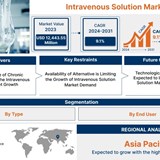
Intravenous Solution Market Size: Intravenous Solution Market size is estimated to reach over USD 24,667.69 Million by 2031 from a value of USD 12,443.55 Million in 2023, growing at a CAGR of 9.1% from 2024 to 2031. Intravenous Solution Market Overview: The Intravenous (IV) Solution Market encompasses the production and distribution of sterile solutions administered directly into a patient's vein. These solutions are critical for ma…
Intravenous Solution Market Size: Intravenous Solution Market size is estimated to reach over USD 24,667.69 Million by 2031 from a value of USD 12,443.55 Million in 2023, growing at a CAGR of 9.1% from 2024 to 2031. Intravenous Solution Market Overview: The Intravenous (IV) Solution Market encompasses the production and distribution of sterile solutions administered directly into a patient's vein. These solutions are critical for ma…
The cochlear implants are medical devices designed to provide hearing to individuals with severe to profound sensorineural hearing loss. Cochlear implants bypass damaged parts of the inner ear by directly stimulating the auditory nerve, enabling sound perception. These devices consist of external components, such as microphones and speech processors, and surgically implanted internal components, including electrodes and a receiver-stimulator.
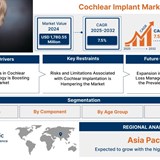
Cochlear Implant Market Size: Cochlear Implant Market size is estimated to reach over USD 3,175.45 Million by 2032 from a value of USD 1,780.55 Million in 2024 and is projected to grow by USD 1,882.36 Million in 2025, growing at a CAGR of 7.5% from 2025 to 2032. Cochlear Implant Market Analysis Overview: The global cochlear implant market is exp…
Cochlear Implant Market Size: Cochlear Implant Market size is estimated to reach over USD 3,175.45 Million by 2032 from a value of USD 1,780.55 Million in 2024 and is projected to grow by USD 1,882.36 Million in 2025, growing at a CAGR of 7.5% from 2025 to 2032. Cochlear Implant Market Analysis Overview: The global cochlear implant market is exp…
Discover the causes, symptoms, and effective treatment options for low platelet count. Learn how to manage platelet deficiency naturally through diet, lifestyle changes, and medical care.
A low platelet count, also known as thrombocytopenia, is a medical condition where the blood has an abnormally low number of platelets, cells responsible for helping the blood clot. A normal platelet count ranges from 150,000 to 450,000 platelets per microliter of blood. When this count drops below the normal range, it can lead to excessive bleeding, easy bruising, and delayed wound healing. Fortunately, with the right low platelet count medication, managing thrombocytopenia is possible. In this blog, we will explore the causes, symptoms, and most importantly, the medications available for treating…
A low platelet count, also known as thrombocytopenia, is a medical condition where the blood has an abnormally low number of platelets, cells responsible for helping the blood clot. A normal platelet count ranges from 150,000 to 450,000 platelets per microliter of blood. When this count drops below the normal range, it can lead to excessive bleeding, easy bruising, and delayed wound healing. Fortunately, with the right low platelet count medication, managing thrombocytopenia is possible. In this blog, we will explore the causes, symptoms, and most importantly, the medications available for treating…
17-Apr-2025
The pharmaceutical sector has been making headlines for large-scale layoffs, department closures, and clinical trial failures. Though the issue is complex, a few trends have emerged showing causes for this disruption: cost-cutting to counteract low profit margins, competitive pressure from imminent patent cliffs, promising drug candidates failing clinical trials, and more.
The pharmaceutical sector has been making headlines for large-scale layoffs, department closures and clinical trial failures. Some companies have even declared bankruptcy in recent months. What is to blame for this disruption? If industry professionals understand what they are up against, they can prepare accordingly. Big Pharma Firms Are Letting People Go Big pharma firms are letting employees go, which could be the sta…
The pharmaceutical sector has been making headlines for large-scale layoffs, department closures and clinical trial failures. Some companies have even declared bankruptcy in recent months. What is to blame for this disruption? If industry professionals understand what they are up against, they can prepare accordingly. Big Pharma Firms Are Letting People Go Big pharma firms are letting employees go, which could be the sta…

15-Apr-2025
API (Active Pharmaceutical Ingredients) is the basic substance that constitutes the pharmacological effect of the drug. API cannot be used directly by patients and must be further processed into preparations by adding excipients before it can be taken by patients. Intermediates are materials produced in the API process steps and must undergo further molecular changes or refinement to become APIs. The API industry in a broad sense includes APIs and intermediates.
WHAT ARE HUMAN API DRUGS? API (Active Pharmaceutical Ingredients) is the basic substance that constitutes the pharmacological effect of the drug. API cannot be used directly by patients and must be further processed into preparations by adding excipients before it can be taken by patients. Intermediates are materials produced in the…
WHAT ARE HUMAN API DRUGS? API (Active Pharmaceutical Ingredients) is the basic substance that constitutes the pharmacological effect of the drug. API cannot be used directly by patients and must be further processed into preparations by adding excipients before it can be taken by patients. Intermediates are materials produced in the…
What would happen if pharmaceutical companies took an active role in educating the public on health-related topics? The possibility comes with pros and cons, but with a focus on efficacy and ethics, such an approach could benefit consumers.
Pharmaceutical experts are used to staying in labs or behind counters, handing customers their prescriptions. Their role in patients’ lives is significant yet understated, with most communications printed on informational leaflets about the medication’s impacts. What would happen if pharmaceutical companies took an active role in educating the public on health-related topics? The possibility comes with pros and cons, but with a focus on efficacy and ethics, such an approach could benefit consumers. What Education Could Pharmaceutical Compani…
Pharmaceutical experts are used to staying in labs or behind counters, handing customers their prescriptions. Their role in patients’ lives is significant yet understated, with most communications printed on informational leaflets about the medication’s impacts. What would happen if pharmaceutical companies took an active role in educating the public on health-related topics? The possibility comes with pros and cons, but with a focus on efficacy and ethics, such an approach could benefit consumers. What Education Could Pharmaceutical Compani…

26-Mar-2025
Selling medical devices to hospitals can be a lucrative yet challenging endeavor. With the healthcare industry growing and the demand for medical devices and medical equipment increasing, understanding how to sell medical devices effectively is crucial. In this guide, we’ll share key strategies for selling medical devices to hospitals, from identifying high-value facilities to proving your knowledge of their needs. Whether you’re selling medical equipment online or engaging with doctors and hospitals directly, these tips will help you navigate the complexities of the healthcare market.
Selling medical devices to hospitals can be a lucrative yet challenging endeavor. With the healthcare industry growing and the demand for medical devices and medical equipment increasing, unde…
Selling medical devices to hospitals can be a lucrative yet challenging endeavor. With the healthcare industry growing and the demand for medical devices and medical equipment increasing, unde…

The nuclear medicine market is rapidly growing, driven by rising cases of cancer and heart disease, along with advancements in SPECT and PET imaging. Valued at $12.2B in 2024, it's expected to reach $29.8B by 2033 at a 10.39% CAGR. Major applications include cardiology, neurology, and oncology, with North America leading the market, while Asia-Pacific sees rapid growth. Key players like GE Healthcare, Bayer, and Novartis focus on innovation. Despite challenges like high costs and regulations, expanding healthcare investments and new radiopharmaceuticals present huge opportunities for future growth.
The global nuclear medicine market is expanding rapidly, thanks to advances in diagnostic imaging and targeted treatments. With the rise in chronic diseases like cancer and heart conditions,…
The global nuclear medicine market is expanding rapidly, thanks to advances in diagnostic imaging and targeted treatments. With the rise in chronic diseases like cancer and heart conditions,…

With the pharmaceutical sector so deeply interconnected with vendors, suppliers and distributors, it faces a broad expanse of third-party cybersecurity risks. To bolster cybersecurity resilience, pharmaceutical companies should establish a robust third-party risk management program, implement strict cybersecurity and compliance requirements in vendor contracts, enforce multi-layered security controls for third-party access, and more.
Cybercriminals’ tactics have evolved to target sensitive data and disrupt research and development in the pharmaceutical ecosystem through a highly effective hub-and-spoke strategy. This new method has attackers compromising a single common vendor — the hub — to access numerous pharma companies — the spokes. Why go for individual companies when you can simply…
Cybercriminals’ tactics have evolved to target sensitive data and disrupt research and development in the pharmaceutical ecosystem through a highly effective hub-and-spoke strategy. This new method has attackers compromising a single common vendor — the hub — to access numerous pharma companies — the spokes. Why go for individual companies when you can simply…

Though several challenges still persist, drones are becoming an industry preference within pharmaceutical supply chains. Drones can enable rapid delivery of lifesaving medications and vaccines, transport temperature-sensitive biopharmaceuticals, enhance supply chain visibility and tracking, and more.
The pharmaceutical industry demands high efficiency to ensure the safe and timely transport of medical products. However, several challenges persist, including infrastructure limitations, the risk of product loss or theft, and ensuring that medical deliveries reach their intended destinations without compromise. Drones are becoming the industry preference, enabling the delivery of critical medical supplies to remote and hard-to-reach areas with significantly reduced transit times. Their ability…
The pharmaceutical industry demands high efficiency to ensure the safe and timely transport of medical products. However, several challenges persist, including infrastructure limitations, the risk of product loss or theft, and ensuring that medical deliveries reach their intended destinations without compromise. Drones are becoming the industry preference, enabling the delivery of critical medical supplies to remote and hard-to-reach areas with significantly reduced transit times. Their ability…

Discover the ultimate guide to becoming a medical sales rep. Learn about different sales roles, including medical devices, pharmaceuticals, and healthcare software. Understand key responsibilities, essential skills, and how to meet industry compliance requirements. Find out how to gain relevant experience through internships, training programs, and sales roles. Learn the differences between inbound and outbound sales, and get tips on preparing for interviews to stand out in a competitive field. Explore the benefits of training programs like Medical Sales College, Medical Sales 101, and New To Medical Device Sales. With potential earnings of $68,000 to over $100,000 per year, this lucrative career offers substantial growth. Start your journey to building strong relationships with healthcare professionals and succeeding in the medtech industry today.

Discover the latest AI innovations transforming healthcare in 2025. From enhanced diagnostics and personalized patient care to operational efficiency, artificial intelligence is reshaping the medical landscape. Learn about top companies like Cleerly, Qure.ai, Owkin, Vitazi.ai, and Exscientia leading the charge with AI-powered solutions. This comprehensive overview also addresses critical challenges like data privacy, algorithm bias, and regulatory compliance. Alpha Sophia supports sales teams by making it easier to find doctors and engage early adopters, helping accelerate AI adoption across the healthcare industry. Find out how AI is redefining healthcare and how Alpha Sophia can help you reach the right audience faster.
AI in Healthcare: Key Innovations and 5 Companies to Watch in 2025…
AI in Healthcare: Key Innovations and 5 Companies to Watch in 2025…
Explore the Biopharma Process Equipment Market, valued at USD 11.8B in 2023 and projected to reach USD 33.2B by 2031, growing at a CAGR of 13.9%.
Executive Summary The biopharma process equipment market is poised for rapid expansion, projected to reach USD 33.2 billion by 2031 from a valuation of USD 11.8 billion in 2023, with a compound annual growth rate (CAGR) of 13.9%. This growth is primarily driven by the increasing demand for biopharmaceutical products, technological advancements, and the rising prevalence of chronic diseases. As the healthcare landscape continues to evolve, biopharma companies are focusing on automation, single-use technologies, and innovative solutions to meet the increasing global demand for biologics and vaccines. Biopharma Process Equipment Market Overview The g…
Executive Summary The biopharma process equipment market is poised for rapid expansion, projected to reach USD 33.2 billion by 2031 from a valuation of USD 11.8 billion in 2023, with a compound annual growth rate (CAGR) of 13.9%. This growth is primarily driven by the increasing demand for biopharmaceutical products, technological advancements, and the rising prevalence of chronic diseases. As the healthcare landscape continues to evolve, biopharma companies are focusing on automation, single-use technologies, and innovative solutions to meet the increasing global demand for biologics and vaccines. Biopharma Process Equipment Market Overview The g…