
Biotech - Articles
Explore how AI is transforming clinical trials—from study design and data management to monitoring, compliance, and faster trial outcomes
AI in clinical trials is addressing the challenges of escalating data complexity and accelerated timelines. AI in clinical trials is being used to handle increasing complexity, larger volumes of data, and shorter development timelines. It enhances not only operational efficiency but also the underlying approach to study design and management, facilitating faster and more reliable insights for strategic decisions. Introduction: Clinical Research at an Inflection Point Clinical trials remain the definitive mechanism for validating the safety, efficacy, and real-world applicability of new therapies and medical devices. Yet despite decades of methodological r…
AI in clinical trials is addressing the challenges of escalating data complexity and accelerated timelines. AI in clinical trials is being used to handle increasing complexity, larger volumes of data, and shorter development timelines. It enhances not only operational efficiency but also the underlying approach to study design and management, facilitating faster and more reliable insights for strategic decisions. Introduction: Clinical Research at an Inflection Point Clinical trials remain the definitive mechanism for validating the safety, efficacy, and real-world applicability of new therapies and medical devices. Yet despite decades of methodological r…
The global biomarkers market is at the forefront of healthcare’s shift toward precision, data-driven medicine. Valued at USD 85.9 billion in 2025 and projected to reach USD 244.8 billion by 2034 at a CAGR of 12.3%.
The landscape of modern healthcare is undergoing a seismic shift, moving away from "one-size-fits-all" treatments toward a highly tailored, data-driven approach. At the heart of this transformation is the global biomarkers market. Valued at USD 85.9 billion in 2025, the sector is projected to surge to an astonishing USD 244.8 billion by 2034. This trajectory, representing a compound annual growth rate (CAGR) of 12.3%, underscores a fundamental change in how we diagnose, monitor, and treat chronic diseases. The Catalysts of Growth: Why Now? The explosive expansion of the biomarker…
The landscape of modern healthcare is undergoing a seismic shift, moving away from "one-size-fits-all" treatments toward a highly tailored, data-driven approach. At the heart of this transformation is the global biomarkers market. Valued at USD 85.9 billion in 2025, the sector is projected to surge to an astonishing USD 244.8 billion by 2034. This trajectory, representing a compound annual growth rate (CAGR) of 12.3%, underscores a fundamental change in how we diagnose, monitor, and treat chronic diseases. The Catalysts of Growth: Why Now? The explosive expansion of the biomarker…

24-Jan-2026
Explore the top EDC platforms for clinical trials in 2026. Features, strengths, limitations, and how to choose the right platform for your study.
Choosing the right EDC (electronic data capture) platform is critical for sponsors, CROs, and clinical operations teams running modern trials. In 2026, clinical trial software solutions have become increasingly sophisticated, ranging from enterprise suites to lean, budget-friendly tools. These clinical trial data capture software systems replace legacy tools with secure, centralized, and modern systems, ensuring 21 CFR Part 11 audit trails, encryption, and compliance with ICH-GCP guidelines. EDC systems are central to modern clinical trials, enhancing data accuracy while enabling real-time monitoring, faster database locks, and streamlined wor…
Choosing the right EDC (electronic data capture) platform is critical for sponsors, CROs, and clinical operations teams running modern trials. In 2026, clinical trial software solutions have become increasingly sophisticated, ranging from enterprise suites to lean, budget-friendly tools. These clinical trial data capture software systems replace legacy tools with secure, centralized, and modern systems, ensuring 21 CFR Part 11 audit trails, encryption, and compliance with ICH-GCP guidelines. EDC systems are central to modern clinical trials, enhancing data accuracy while enabling real-time monitoring, faster database locks, and streamlined wor…
Anti-aging and longevity are expanding beyond beauty into an industry driven by biomarkers like blood sugar, inflammation, sleep, muscle, and biological age. The key question is whether longevity is healthcare or lifestyle, shaping regulation, evidence, pricing, and consumers. Healthcare focuses on measurable interventions to reduce disease risk, while lifestyle emphasizes daily habits supported by nutraceuticals, wearables, and digital coaching. Ultimately, the market grows fastest in the middle ground, where trust and sustainable routines matter most.
The desire to stay young is almost instinctive. Yet in recent years, that desire has evolved beyond simple beauty or wellness, transforming into an entire industry known as longevity. In the past, youthful appearance was often associated wit…
The desire to stay young is almost instinctive. Yet in recent years, that desire has evolved beyond simple beauty or wellness, transforming into an entire industry known as longevity. In the past, youthful appearance was often associated wit…

Learn what a clinical trial protocol is, why it matters, and how it guides study design, compliance, and execution in clinical research.
A clinical trial protocol is the foundation of clinical research, detailing objectives, study design, eligibility, safety oversight, and data analysis. Its structure ensures consistency and credibility, guiding investigators while protecting participants and maintaining scientific rigor. With digital solutions, eProtocols and AI are modernizing protocols in clinical trials, making processes more adaptive and reducing inefficiencies. Introduction Every clinical trial depends on a detailed plan that outlines how the study will be run, how participants will be safeguarded, and how results will be measured. This plan, called a clini…
A clinical trial protocol is the foundation of clinical research, detailing objectives, study design, eligibility, safety oversight, and data analysis. Its structure ensures consistency and credibility, guiding investigators while protecting participants and maintaining scientific rigor. With digital solutions, eProtocols and AI are modernizing protocols in clinical trials, making processes more adaptive and reducing inefficiencies. Introduction Every clinical trial depends on a detailed plan that outlines how the study will be run, how participants will be safeguarded, and how results will be measured. This plan, called a clini…
30-Oct-2025
Precision-fermented proteins offer the tantalising prospect of radically uncoupling our nutrition from arable land. However, the journey from laboratory titre to multi-kiloton commodity supply chains has many non-trivial hurdles in between.
Protein fermentation describes the microbial population's controlled breakdown and build-up of nitrogenous compounds under specific redox potential, pH balance and substrate limitation constraints. The process generally begins with the extracellular degradation of high molecular weight proteins. Protein hydrolysis by microbial aspartic proteases (fungi) or metalloproteases (bacteria) yields oligopeptides (2–20 residues) that are taken up into the cell via specific oligopeptide permeases. Intracellular di- and tri-peptidases further hydrolyze peptide…
Protein fermentation describes the microbial population's controlled breakdown and build-up of nitrogenous compounds under specific redox potential, pH balance and substrate limitation constraints. The process generally begins with the extracellular degradation of high molecular weight proteins. Protein hydrolysis by microbial aspartic proteases (fungi) or metalloproteases (bacteria) yields oligopeptides (2–20 residues) that are taken up into the cell via specific oligopeptide permeases. Intracellular di- and tri-peptidases further hydrolyze peptide…
30-Oct-2025
In chemistry, materials science and many industries, polyethylene glycol (PEG) and ethylene glycol (EG) are two very crucial chemicals. Both are structurally similar but very different in terms of physical characteristics, chemical characteristics and functional fields.
Chemical Structure and Molecular Weight Polyethylene Glycol is the polymer form of EG, with its molecular weight varying depending on the degree of polymerization. The molecular weight of PEG generally ranges from hundreds to tens of thousands, while EG has a molecular weight of only 62. This difference in molecular weight leads to significant differences in their physical properties and applications. The polymer structure of PEG gives it higher viscosity and better biocompatibility, whereas EG's low molecular weight r…
Chemical Structure and Molecular Weight Polyethylene Glycol is the polymer form of EG, with its molecular weight varying depending on the degree of polymerization. The molecular weight of PEG generally ranges from hundreds to tens of thousands, while EG has a molecular weight of only 62. This difference in molecular weight leads to significant differences in their physical properties and applications. The polymer structure of PEG gives it higher viscosity and better biocompatibility, whereas EG's low molecular weight r…
Artificial intelligence (AI) is rapidly transforming biomarker discovery by unlocking insights from vast and complex datasets. Hurdle recently reviewed how revolutionary this technology could be, while also highlighting the potential hurdles that still stand in the way of its translation into the clinic.
Artificial intelligence (AI) is rapidly transforming biomarker discovery by unlocking insights from vast and complex datasets. Hurdle recently reviewed how revolutionary this technology could be, while also highlighting the potential hurdles that still stand in the way of its translation into the clinic. The Explosion of Data: Bigger, Broader, More ComplexLarge cohort studies are no longer a curiosity; they’re foundational. Crucially, these cohorts increasingly link rich electronic h…
Artificial intelligence (AI) is rapidly transforming biomarker discovery by unlocking insights from vast and complex datasets. Hurdle recently reviewed how revolutionary this technology could be, while also highlighting the potential hurdles that still stand in the way of its translation into the clinic. The Explosion of Data: Bigger, Broader, More ComplexLarge cohort studies are no longer a curiosity; they’re foundational. Crucially, these cohorts increasingly link rich electronic h…

In longitudinal clinical trials, missing data is a threat to scientific integrity. Whether due to patient dropouts, missed visits, or protocol deviations, these gaps can distort results, reduce statistical power, and invite regulatory scrutiny. With dropout rates averaging around 3-8% for the last three years, the stakes are high. As the industry continues to evolve, so should the strategies we implement.
In longitudinal clinical trials, missing data is a threat to scientific integrity. Whether due to patient dropouts, missed visits, or protocol deviations, these gaps can distort results, reduce statistical power, and invite regulatory scrutiny. With dropout rates averaging around 3-8% for the last three years, the stakes are high. As the industry continues to evolve, so should the str…
In longitudinal clinical trials, missing data is a threat to scientific integrity. Whether due to patient dropouts, missed visits, or protocol deviations, these gaps can distort results, reduce statistical power, and invite regulatory scrutiny. With dropout rates averaging around 3-8% for the last three years, the stakes are high. As the industry continues to evolve, so should the str…

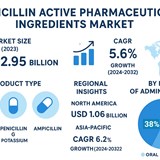
The global Penicillin Active Pharmaceutical Ingredients (API) market was valued at USD 2.95 billion in 2023 and is projected to reach USD 4.79 billion by 2032, growing at a CAGR of 5.6%. This growth is driven by the increasing demand for antibiotics, advancements in manufacturing technologies, and the expansion of healthcare infrastructure in emerging economies. The report provides an in-depth analysis of market trends, key players, and regional dynamics, offering valuable insights for stakeholders in the pharmaceutical industry.
The Penicillin Active Pharmaceutical Ingredients (APIs) market represents a cornerstone of the global pharmaceutical industry, providing the essential building blocks for antibiotics that combat a wide range of bacterial infections. With its critical role in health…
The Penicillin Active Pharmaceutical Ingredients (APIs) market represents a cornerstone of the global pharmaceutical industry, providing the essential building blocks for antibiotics that combat a wide range of bacterial infections. With its critical role in health…
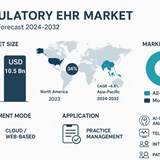
The global Ambulatory EHR Market is projected to grow from USD 6.1 billion in 2023 to USD 10.5 billion by 2032 at a CAGR of 6.3%. Explore market size, major regional trends, deployment shifts toward cloud/web-based models, leading vendors, and what to expect through 2032 in this comprehensive analysis guided by Ameco Research.
In recent years, the healthcare industry has undergone rapid digital transformation. Among its key components is the adoption of Ambulatory EHR (Electronic Health Records in outpatient / ambulatory care settings) systems. These solutions are essential tools for physician offices, specialty clinics, and other outpatient facilities to maintain accurate patient histories, manage clinical workflows, enable remote care protocols, and meet regulatory requirements. As pressu…
In recent years, the healthcare industry has undergone rapid digital transformation. Among its key components is the adoption of Ambulatory EHR (Electronic Health Records in outpatient / ambulatory care settings) systems. These solutions are essential tools for physician offices, specialty clinics, and other outpatient facilities to maintain accurate patient histories, manage clinical workflows, enable remote care protocols, and meet regulatory requirements. As pressu…
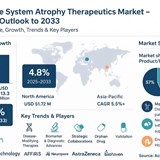
Multiple System Atrophy Therapeutics is an evolving field focused on treating a rare neurodegenerative disease with no cure. This article examines the Multiple System Atrophy Therapeutics Market, its size, growth drivers, recent product development, regional trends, key players, and what lies ahead up to 2033—based largely on the report by Acumen Research And Consulting.
What is Multiple System Atrophy and the Role of Therapeutics Multiple System Atrophy (MSA) is a progressive, rare neurodegenerative disorder adversely affecting the autonomic nervous system, movement, balance, coordination, and various bodily functions. Patients experience tremor, parkinsonian symptoms, cerebellar dysfunction, autonomic dysregulation (blood pressure, bladder control), and rapidly declining ability to perfor…
What is Multiple System Atrophy and the Role of Therapeutics Multiple System Atrophy (MSA) is a progressive, rare neurodegenerative disorder adversely affecting the autonomic nervous system, movement, balance, coordination, and various bodily functions. Patients experience tremor, parkinsonian symptoms, cerebellar dysfunction, autonomic dysregulation (blood pressure, bladder control), and rapidly declining ability to perfor…
The CBH Biospecimen Marketplace is an online biobank and biorepository built for teams who need human biological samples with audit-ready documentation and dependable logistics. Our continuously curated biological specimen inventory exceeds a quarter of a million active units and spans serum, plasma, whole blood, PBMC for research, urine samples, cerebrospinal fluid (CSF), saliva, stool/feces/faeces, swab samples, and human tissue (FFPE and frozen). You can search, filter, compare, and order human biospecimens for research, development, and production—not only RUO feasibility. What differentiates the platform is scientific traceability: standardized preanalytics, transparent biospecimen data, and route-proven cold-chain shipping.
What Counts as a Human Biological Specimen? Human biol…
What Counts as a Human Biological Specimen? Human biol…
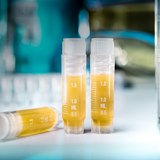
Nutrigenomics is reshaping how we understand the connection between genes and diet. This article explores how DNA insights can guide personalized nutrition, improve long-term wellness strategies, and empower individuals to make informed lifestyle choices. With privacy-first, on-device processing, Noorns provides a secure and innovative approach to DNA-based health insights, bridging science and everyday health.
Nutrigenomics, the study of how our genes interact with diet, is emerging as one of the most promising areas in personalized health. Genetic variations can influence how we metabolize nutrients, respond to supplements, and manage risks for chronic conditions. Understanding these patterns opens new opportunities for preventative care, optimized wellness strategies, and more targeted i…
Nutrigenomics, the study of how our genes interact with diet, is emerging as one of the most promising areas in personalized health. Genetic variations can influence how we metabolize nutrients, respond to supplements, and manage risks for chronic conditions. Understanding these patterns opens new opportunities for preventative care, optimized wellness strategies, and more targeted i…
Design alone is no longer enough to bring transformative products to life. While great design sparks creativity and defines user experience, development is what turns vision into reality. At Hurdle, we believe that true innovation demands more than following a conventional design process-it requires a smarter, more holistic approach that aligns strategy, technology, and market readiness.
A successful design and development process must balance exploration with structure, enabling teams to build high-quality products efficiently while adapting to change along the way. Yet, while the traditional design process may comprise four to five defined phases, Hurdle believes there is more to consider from the outset. Elements such as business analysis, capability planning, budgetary controls, capabil…
A successful design and development process must balance exploration with structure, enabling teams to build high-quality products efficiently while adapting to change along the way. Yet, while the traditional design process may comprise four to five defined phases, Hurdle believes there is more to consider from the outset. Elements such as business analysis, capability planning, budgetary controls, capabil…

The United States Food and Drug Administration’s (FDA’s) Accelerated Approval (AA) pathway, initially established in 1992 during the HIV/AIDS epidemic to provide faster access to life-saving treatments, has been instrumental in expediting access to therapies for serious and life-threatening conditions. It is particularly significant in therapeutic areas, such as rare diseases, where surrogate or intermediate clinical endpoints may be necessary due to limited patient populations or slow disease progression. While this approach has encouraged innovation, it has also raised concerns about drugs staying on the market without confirmed evidence of their effectiveness.
The United States Food and Drug Administration’s (FDA’s) Accelerated Approval (AA) pathway, initially established in 1992 during…
The United States Food and Drug Administration’s (FDA’s) Accelerated Approval (AA) pathway, initially established in 1992 during…
08-Aug-2025
From sequence to 30 L and manufacturing scale, why outsourcing saves resources in the long run and makes economic sense.
Isomerase is a leading bioprocessing company that offers partners the ability to scale up their processes or projects from the lab to industrial manufacturing. Partners from various industries, including pharma, biotech, as well as food and ingredients, opt to work with our bioprocessing services when scaling. In this article, we provide an overview of what we offer, enabling you to make an informed decision when considering outsourcing. What is microbial bioprocessing? Once a microbe and the product of interest have been optimised, by engineering the production strain and/or target sequence, the process needs to be scaled. Generating such a product within a livin…
Isomerase is a leading bioprocessing company that offers partners the ability to scale up their processes or projects from the lab to industrial manufacturing. Partners from various industries, including pharma, biotech, as well as food and ingredients, opt to work with our bioprocessing services when scaling. In this article, we provide an overview of what we offer, enabling you to make an informed decision when considering outsourcing. What is microbial bioprocessing? Once a microbe and the product of interest have been optimised, by engineering the production strain and/or target sequence, the process needs to be scaled. Generating such a product within a livin…
The intimate wash care products industry is projected to grow steadily through 2032, driven by changing hygiene standards, rising awareness, and evolving consumer preferences. Explore trends, market share insights, and growth drivers.
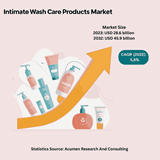
In recent years, the global health and wellness industry has seen an unprecedented evolution—not only in mainstream personal care but also in intimate hygiene. Among the most dynamic and increasingly visible segments is the intimate wash care products category, which has transitioned from niche awareness to everyday consumer routines in many parts of the world. As per data released by Acumen Research and Consulting, the global intimate wash care product market was valued at USD 28.6 billion in 2023 and is projected to reach USD 45.9 billion by 2032, expanding…
In recent years, the global health and wellness industry has seen an unprecedented evolution—not only in mainstream personal care but also in intimate hygiene. Among the most dynamic and increasingly visible segments is the intimate wash care products category, which has transitioned from niche awareness to everyday consumer routines in many parts of the world. As per data released by Acumen Research and Consulting, the global intimate wash care product market was valued at USD 28.6 billion in 2023 and is projected to reach USD 45.9 billion by 2032, expanding…
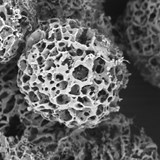
Examine the Regenerative Medicine Scaffolds Market growth—from USD 336.5 Million in 2023 to USD 1.72 Billion by 2032 at a 20.2% CAGR. Learn key trends, technology advances, regional dynamics, and tissue repair innovations reshaping healthcare.
Biomaterials engineered to restore, replace, or augment damaged tissues are gaining momentum—and at the core are Regenerative Medicine Scaffolds, critical in advancing tissue repair across orthopedics, neurology, wound healing, and cardiovascular applications. Our recent analysis at Acumen Research & Consulting sheds light on shifting market dynamics, emerging technologies, and region-wise growth projections. Market Size & Growth Outlook The Regenerative Medicine Scaffolds Market Size reached USD 336.5 million in 2023 and is forecast to so…
Biomaterials engineered to restore, replace, or augment damaged tissues are gaining momentum—and at the core are Regenerative Medicine Scaffolds, critical in advancing tissue repair across orthopedics, neurology, wound healing, and cardiovascular applications. Our recent analysis at Acumen Research & Consulting sheds light on shifting market dynamics, emerging technologies, and region-wise growth projections. Market Size & Growth Outlook The Regenerative Medicine Scaffolds Market Size reached USD 336.5 million in 2023 and is forecast to so…
Fermentation development is the key to scaling bio-based innovation. Here we cover Isomerase’s step-by-step approach, from strain selection to downstream integration, helping biotech, pharma, and food tech companies accelerate reliable, scalable microbial production.
Microbial Fermentation Services: From Strain Design to Scalable Process Fermentation is one of the oldest biotechnologies, yet it’s now driving some of the most cutting-edge innovations in health, nutrition, and sustainability. From therapeutic enzymes and precision fermentation ingredients to biodegradable materials and alternative proteins, microbial fermentation has re-emerged as a core engine of the modern bioeconomy. However, while the science behind engineered microbes is advancing rapidly, the path from disc…
Microbial Fermentation Services: From Strain Design to Scalable Process Fermentation is one of the oldest biotechnologies, yet it’s now driving some of the most cutting-edge innovations in health, nutrition, and sustainability. From therapeutic enzymes and precision fermentation ingredients to biodegradable materials and alternative proteins, microbial fermentation has re-emerged as a core engine of the modern bioeconomy. However, while the science behind engineered microbes is advancing rapidly, the path from disc…
