Clinical research - Articles
Explore how AI is transforming clinical trials—from study design and data management to monitoring, compliance, and faster trial outcomes
AI in clinical trials is addressing the challenges of escalating data complexity and accelerated timelines. AI in clinical trials is being used to handle increasing complexity, larger volumes of data, and shorter development timelines. It enhances not only operational efficiency but also the underlying approach to study design and management, facilitating faster and more reliable insights for strategic decisions. Introduction: Clinical Research at an Inflection Point Clinical trials remain the definitive mechanism for validating the safety, efficacy, and real-world applicability of new therapies and medical devices. Yet despite decades of methodological r…
AI in clinical trials is addressing the challenges of escalating data complexity and accelerated timelines. AI in clinical trials is being used to handle increasing complexity, larger volumes of data, and shorter development timelines. It enhances not only operational efficiency but also the underlying approach to study design and management, facilitating faster and more reliable insights for strategic decisions. Introduction: Clinical Research at an Inflection Point Clinical trials remain the definitive mechanism for validating the safety, efficacy, and real-world applicability of new therapies and medical devices. Yet despite decades of methodological r…
24-Jan-2026
Explore the top EDC platforms for clinical trials in 2026. Features, strengths, limitations, and how to choose the right platform for your study.
Choosing the right EDC (electronic data capture) platform is critical for sponsors, CROs, and clinical operations teams running modern trials. In 2026, clinical trial software solutions have become increasingly sophisticated, ranging from enterprise suites to lean, budget-friendly tools. These clinical trial data capture software systems replace legacy tools with secure, centralized, and modern systems, ensuring 21 CFR Part 11 audit trails, encryption, and compliance with ICH-GCP guidelines. EDC systems are central to modern clinical trials, enhancing data accuracy while enabling real-time monitoring, faster database locks, and streamlined wor…
Choosing the right EDC (electronic data capture) platform is critical for sponsors, CROs, and clinical operations teams running modern trials. In 2026, clinical trial software solutions have become increasingly sophisticated, ranging from enterprise suites to lean, budget-friendly tools. These clinical trial data capture software systems replace legacy tools with secure, centralized, and modern systems, ensuring 21 CFR Part 11 audit trails, encryption, and compliance with ICH-GCP guidelines. EDC systems are central to modern clinical trials, enhancing data accuracy while enabling real-time monitoring, faster database locks, and streamlined wor…
21-Jan-2026
Clinical trial sites deal with many small challenges during daily work managing patient visits, paperwork and timelines can be stressful at times teams also face issues like staff shortages and sudden protocol changes; this article explains the common problems trial sites face and how they affect day to day operations.
When we think of a clinical trial we often imagine the global breakthroughs the headlines announcing a new cure or a revolutionary vaccine however the true work happens in the trenches at the clinical trial sites where research becomes real life care. For those beginning their journey with a clinical research course in India the curriculum often highlights the ideal protocol but as any seasoned professional will tell you the day to day reality at a research site is a delicate…
When we think of a clinical trial we often imagine the global breakthroughs the headlines announcing a new cure or a revolutionary vaccine however the true work happens in the trenches at the clinical trial sites where research becomes real life care. For those beginning their journey with a clinical research course in India the curriculum often highlights the ideal protocol but as any seasoned professional will tell you the day to day reality at a research site is a delicate…
Technology is changing how clinical trials are planned and carried out today simple digital tools help researchers collect data faster and reduce mistakes. Online systems also make it easier to track patient safety and study progress because of this trials can run more smoothly and reach results in less time while keeping patient care important.
The way we discover and test new medicines is undergoing a massive transformation for decades the process of bringing a life saving drug to the public was a slow, paper heavy journey that required patients to live near major city hospitals. However as we move further into 2026 technology has become the heartbeat of medical progress for anyone looking to start a career in this field, the first step is often enrolling in a clinical research course in…
The way we discover and test new medicines is undergoing a massive transformation for decades the process of bringing a life saving drug to the public was a slow, paper heavy journey that required patients to live near major city hospitals. However as we move further into 2026 technology has become the heartbeat of medical progress for anyone looking to start a career in this field, the first step is often enrolling in a clinical research course in…
Learn what a clinical trial protocol is, why it matters, and how it guides study design, compliance, and execution in clinical research.
A clinical trial protocol is the foundation of clinical research, detailing objectives, study design, eligibility, safety oversight, and data analysis. Its structure ensures consistency and credibility, guiding investigators while protecting participants and maintaining scientific rigor. With digital solutions, eProtocols and AI are modernizing protocols in clinical trials, making processes more adaptive and reducing inefficiencies. Introduction Every clinical trial depends on a detailed plan that outlines how the study will be run, how participants will be safeguarded, and how results will be measured. This plan, called a clini…
A clinical trial protocol is the foundation of clinical research, detailing objectives, study design, eligibility, safety oversight, and data analysis. Its structure ensures consistency and credibility, guiding investigators while protecting participants and maintaining scientific rigor. With digital solutions, eProtocols and AI are modernizing protocols in clinical trials, making processes more adaptive and reducing inefficiencies. Introduction Every clinical trial depends on a detailed plan that outlines how the study will be run, how participants will be safeguarded, and how results will be measured. This plan, called a clini…
Decentralized clinical trials software shifts research toward patient-centric models, blending remote tools with traditional rigor.
You're deep in clinical research operations, and decentralized clinical trials software has become the go-to for handling remote and hybrid models effectively. These clinical trials software fuses clinical research software capabilities with robust CTMS software to manage data flows, patient interactions, and compliance across distributed setups. As the market surges toward USD 9.39 billion in 2025 with a 14.67% CAGR, these tools deliver the precision needed for faster, scalable trials. Breaking Down Data Silos First Start with unified platforms that integrate EDC, eCOA, and eConsent into a single system, so you avoid chasing data across vend…
You're deep in clinical research operations, and decentralized clinical trials software has become the go-to for handling remote and hybrid models effectively. These clinical trials software fuses clinical research software capabilities with robust CTMS software to manage data flows, patient interactions, and compliance across distributed setups. As the market surges toward USD 9.39 billion in 2025 with a 14.67% CAGR, these tools deliver the precision needed for faster, scalable trials. Breaking Down Data Silos First Start with unified platforms that integrate EDC, eCOA, and eConsent into a single system, so you avoid chasing data across vend…

Pharmacovigilance (PV) is an essential component in the patient safety system to find, evaluate and prevent adverse effects for medicinal products. As the life sciences sector continues to mature beyond national boundaries, pharmaceutical and biotech companies are given a strategic option — to choose global pharmacovigilance consulting services, or local PV partners.
Global vs Local Pharmacovigilance Consulting Partner Pharmacovigilance (PV) is an essential component in the patient safety system to find, evaluate and prevent adverse effects for medicinal products. As the life sciences sector continues to mature beyond national boundaries, pharmaceutical and biotech companies are given a strategic option — to choose global pharmacovigilance consulting services, or local PV partners. Each ap…
Global vs Local Pharmacovigilance Consulting Partner Pharmacovigilance (PV) is an essential component in the patient safety system to find, evaluate and prevent adverse effects for medicinal products. As the life sciences sector continues to mature beyond national boundaries, pharmaceutical and biotech companies are given a strategic option — to choose global pharmacovigilance consulting services, or local PV partners. Each ap…
Recombinant Human Albumin Injection (Oryza Sativa), or OsrHSA, is a plant-based therapy for hypoalbuminemia (≤30 g/L) in cirrhosis patients, developed by Wuhan Healthgen Biotechnology. Produced from rice grains, it provides a safe alternative to plasma-derived albumin, free from pathogen risks and supply issues. Approved by China's NMPA on July 18, 2025, phase III trials showed non-inferior efficacy in increasing albumin levels and managing ascites. The NCT06355479 study confirmed its safety in decompensated cirrhosis. Hong Kong wholesalers like DengYuePharma specialize in exporting such rare drugs globally, boosting access. This advances sustainable biotech in liver care.
Hypoalbuminemia, characterized by serum albumin levels ≤30 g/L, is a common complication in patients with cirrhosis, of…
Hypoalbuminemia, characterized by serum albumin levels ≤30 g/L, is a common complication in patients with cirrhosis, of…
Learn how to create a successful Clinical Development Plan covering Preclinical Development to regulatory approval, ensuring patient safety.
For a drug to be discovered and supplied in the market, it takes 10 to 15 years and costs over $2.6 billion on average. Out of 10,000 compounds that reach early research, only one secures regulatory approval. The life cycle of a drug from research to launch requires the expertise of hundreds of scientists, clinicians, statisticians, regulatory specialists, and extensive animal studies with human clinical trials. Any one error in the whole process can be expensive and time-consuming. A clinical development plan acts as the plan for the whole process, ensuring the proper workflow of the drug discovery. Clinical Development Plan: An Over…
For a drug to be discovered and supplied in the market, it takes 10 to 15 years and costs over $2.6 billion on average. Out of 10,000 compounds that reach early research, only one secures regulatory approval. The life cycle of a drug from research to launch requires the expertise of hundreds of scientists, clinicians, statisticians, regulatory specialists, and extensive animal studies with human clinical trials. Any one error in the whole process can be expensive and time-consuming. A clinical development plan acts as the plan for the whole process, ensuring the proper workflow of the drug discovery. Clinical Development Plan: An Over…
Many “hard” regions are operationally complex, not clinically weak. Sponsors that hire local CRA and regulatory consultants gain language and regulatory fluency on the ground, faster submissions, fewer errors, and stronger site relationships—turning delays into predictable startup.
Early in my career, I was helping coordinate a Phase II oncology trial across multiple time zones. One site, located in Eastern Europe, kept falling behind. The issue wasn’t patient recruitment. It was communication. The sponsor was based in California, the CRA was based in London, and the site team didn’t speak much English. Even simple updates took days. We lost time, strained relationships, and nearly missed key milestones. That experience stuck with me. And it taught me a lesson more sponsors are starting to…
Early in my career, I was helping coordinate a Phase II oncology trial across multiple time zones. One site, located in Eastern Europe, kept falling behind. The issue wasn’t patient recruitment. It was communication. The sponsor was based in California, the CRA was based in London, and the site team didn’t speak much English. Even simple updates took days. We lost time, strained relationships, and nearly missed key milestones. That experience stuck with me. And it taught me a lesson more sponsors are starting to…
Because it directly improves lives, clinical research is referred to as a "human impact" career. Researchers help create new treatments, guarantee patient safety and advance medical knowledge each study advances healthcare providing professionals with the fulfillment of truly improving people's health and well-being.
Introduction: The Power of Purpose When people think about careers in science or healthcare, their minds often jump straight to doctors, nurses or lab technicians but there is a vital, often overlooked profession that serves as the bridge between brilliant scientific discovery and a patient receiving a life saving treatment clinical research this field is fundamentally driven by a single purpose making a tangible, positive change in people lives it is a career for those who cra…
Introduction: The Power of Purpose When people think about careers in science or healthcare, their minds often jump straight to doctors, nurses or lab technicians but there is a vital, often overlooked profession that serves as the bridge between brilliant scientific discovery and a patient receiving a life saving treatment clinical research this field is fundamentally driven by a single purpose making a tangible, positive change in people lives it is a career for those who cra…

Adaptive clinical trials indicate a major shift in the drug development process as they implement pre-specified and data-driven changes in medical or drug interventions during the healing process, without violating scientific integrity. Adaptive trials differ from traditional fixed designs in that changes to a treatment, sample size, dose, treatment arms, or endpoints can modified on the basis of interim analyses, and they are conducted in real time rather than waiting until the study is completed.
Adaptive clinical trials are constructed with the flexibility to amend aspects of the study based on interim data analysis, while maintaining the rigor or validity of the clinical trial. Traditional trials, by contrast, follow a predetermined protocol from start to finish. Adaptive clinical trial…
Adaptive clinical trials are constructed with the flexibility to amend aspects of the study based on interim data analysis, while maintaining the rigor or validity of the clinical trial. Traditional trials, by contrast, follow a predetermined protocol from start to finish. Adaptive clinical trial…
The future of clinical trial management is being reshaped by technology, data intelligence, and patient-centric innovation. From AI-driven analytics and blockchain transparency to virtual trials and wearable integration, modern research is becoming faster, smarter, and more compliant. These innovations enhance data accuracy, streamline workflows, and improve participant engagement. With evolving global regulations and decentralized models, life sciences companies are partnering with a reliable Clinical Trial Management Software Development Company to ensure seamless digital transformation. The convergence of automation, cloud platforms, and predictive insights marks a new era of efficiency and collaboration in clinical research.
Clinical trials form the backbone of modern medicine, bridging…
Clinical trials form the backbone of modern medicine, bridging…
Histopathological grading examines tissue samples under a microscope to determine the severity of most cancers, and AI can complement human efforts to improve grading. To evaluate AI performance, experts should use a standardized dataset, preprocess AI algorithms against the foundation, and more.
Pharmaceutical experts have been upgrading pathological analysis methods for years. Uncovering secrets under microscopes requires years of training and extensive data, particularly for samples containing cancerous cells. Grading each prognosis demands precision that can be enhanced with the help of artificial intelligence. What Is Histopathological Grading? Histopathological grading examines tissue samples under a microscope to determine the severity of most cancers. It observes trends like c…
Pharmaceutical experts have been upgrading pathological analysis methods for years. Uncovering secrets under microscopes requires years of training and extensive data, particularly for samples containing cancerous cells. Grading each prognosis demands precision that can be enhanced with the help of artificial intelligence. What Is Histopathological Grading? Histopathological grading examines tissue samples under a microscope to determine the severity of most cancers. It observes trends like c…

In longitudinal clinical trials, missing data is a threat to scientific integrity. Whether due to patient dropouts, missed visits, or protocol deviations, these gaps can distort results, reduce statistical power, and invite regulatory scrutiny. With dropout rates averaging around 3-8% for the last three years, the stakes are high. As the industry continues to evolve, so should the strategies we implement.
In longitudinal clinical trials, missing data is a threat to scientific integrity. Whether due to patient dropouts, missed visits, or protocol deviations, these gaps can distort results, reduce statistical power, and invite regulatory scrutiny. With dropout rates averaging around 3-8% for the last three years, the stakes are high. As the industry continues to evolve, so should the str…
In longitudinal clinical trials, missing data is a threat to scientific integrity. Whether due to patient dropouts, missed visits, or protocol deviations, these gaps can distort results, reduce statistical power, and invite regulatory scrutiny. With dropout rates averaging around 3-8% for the last three years, the stakes are high. As the industry continues to evolve, so should the str…

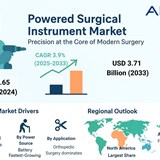
The Powered Surgical Instrument Market is witnessing steady growth, driven by rising surgical volumes, an aging global population, and rapid technological advancements. Valued at USD 2.65 billion in 2024, the market is projected to reach USD 3.71 billion by 2033, expanding at a CAGR of 3.9%. Key growth factors include the adoption of minimally invasive procedures, demand for precision in orthopedic and reconstructive surgeries, and the integration of battery-powered and ergonomic devices. North America currently dominates the Powered Surgical Instrument Market Share, while Asia-Pacific is poised for the fastest growth. Challenges such as high costs, sterilization risks, and training gaps persist, but innovations like robotic integration and cordless systems are shaping future opportunities.
By establishing a safe and impenetrable record of each charge, payment or adjustment blockchain technology has the potential to increase medical billing transparency. Patients, providers and insurers can all view the shared ledger in real time, reducing billing errors, fraud and hidden costs while also making the process easier to track and comprehend by enhancing clarity and trust, blockchain technology could make medical billing easier and more equitable for all parties.
Introduction: Unmasking the Medical Billing Maze If you have ever felt lost trying to decipher a hospital bill or an insurance Explanation of Benefits (EOB) you are not alone the journey from receiving a medical service to paying the final bill is convoluted, often involving multiple intermediaries, archaic data systems a…
Introduction: Unmasking the Medical Billing Maze If you have ever felt lost trying to decipher a hospital bill or an insurance Explanation of Benefits (EOB) you are not alone the journey from receiving a medical service to paying the final bill is convoluted, often involving multiple intermediaries, archaic data systems a…
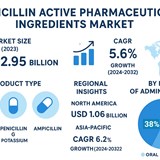
The global Penicillin Active Pharmaceutical Ingredients (API) market was valued at USD 2.95 billion in 2023 and is projected to reach USD 4.79 billion by 2032, growing at a CAGR of 5.6%. This growth is driven by the increasing demand for antibiotics, advancements in manufacturing technologies, and the expansion of healthcare infrastructure in emerging economies. The report provides an in-depth analysis of market trends, key players, and regional dynamics, offering valuable insights for stakeholders in the pharmaceutical industry.
The Penicillin Active Pharmaceutical Ingredients (APIs) market represents a cornerstone of the global pharmaceutical industry, providing the essential building blocks for antibiotics that combat a wide range of bacterial infections. With its critical role in health…
The Penicillin Active Pharmaceutical Ingredients (APIs) market represents a cornerstone of the global pharmaceutical industry, providing the essential building blocks for antibiotics that combat a wide range of bacterial infections. With its critical role in health…
Clinical trials are the backbone of modern medicine but they have historically suffered from a lack of diversity among their participants this has created significant gaps in our understanding of how treatments and medications affect different groups of people this article explores the critical need for diversity in clinical trial recruitment discussing the scientific and ethical reasons behind it, the barriers that prevent it and the strategies being implemented to create a more inclusive and effective future for medical research by ensuring trials are representative of the global population we can improve the safety and efficacy of new therapies for everyone, build greater public trust and move closer to achieving true health equity.
Introduction In the world of medical breakthroughs, cli…
Introduction In the world of medical breakthroughs, cli…

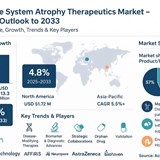
Multiple System Atrophy Therapeutics is an evolving field focused on treating a rare neurodegenerative disease with no cure. This article examines the Multiple System Atrophy Therapeutics Market, its size, growth drivers, recent product development, regional trends, key players, and what lies ahead up to 2033—based largely on the report by Acumen Research And Consulting.
What is Multiple System Atrophy and the Role of Therapeutics Multiple System Atrophy (MSA) is a progressive, rare neurodegenerative disorder adversely affecting the autonomic nervous system, movement, balance, coordination, and various bodily functions. Patients experience tremor, parkinsonian symptoms, cerebellar dysfunction, autonomic dysregulation (blood pressure, bladder control), and rapidly declining ability to perfor…
What is Multiple System Atrophy and the Role of Therapeutics Multiple System Atrophy (MSA) is a progressive, rare neurodegenerative disorder adversely affecting the autonomic nervous system, movement, balance, coordination, and various bodily functions. Patients experience tremor, parkinsonian symptoms, cerebellar dysfunction, autonomic dysregulation (blood pressure, bladder control), and rapidly declining ability to perfor…