Today Stories
GSK has entered an exclusive strategic collaboration with Sino Biopharmaceutical’s subsidiary Chia Tai Tianqing Pharmaceutical Group (CTTQ) to accelerate the launch of bepirovirsen in mainland China. The investigational therapy is currently under priority regulatory review in China as a potential first-in-class treatment for chronic hepatitis B (CHB).
Under the agreement, CTTQ will oversee importation, distribution, hospital access and promotional activities for bepirovirsen across mainland China. GSK will retain responsibility for regulatory oversight, pharmacovigilance, quality and global medical strategy. The collaboration combines GSK’s innovation capabilities with CTTQ’s extensive commercial network, which spans more than 5,000 medical centres across China.
Bepirovirsen is an antise…
UCB, Cancer Research UK and Cancer Research Horizons have announced a new strategic alliance aimed at accelerating the development of novel cancer therapies. The collaboration will combine UCB’s expertise in antibody discovery and drug development with Cancer Research UK’s translational research capabilities and Cancer Research Horizons’ oncology innovation network.
The partnership is designed to speed the progression of promising oncology assets from early discovery through to clinical development, with a focus on delivering innovative targeted therapies for patients with high unmet medical need. By bringing together scientific, clinical and commercial expertise, the organisations aim to strengthen the translation of cutting-edge cancer research into potential new medicines.
Cancer Resear…
MSD (Merck Sharp & Dohme) has agreed to acquire Terns Pharmaceuticals in an all cash deal valued at approximately USD 6.7 billion, expanding its oncology and hematology pipeline. The acquisition gives Merck access to TERN 701, an investigational oral treatment for chronic myeloid leukemia currently in Phase 1 and 2 development. Merck said the programme has the potential to become a leading option for certain blood cancer patients and supports the company’s long term growth strategy as it looks to strengthen its portfolio beyond Keytruda.
Under the agreement, MSD will pay USD 53 per share for Terns, representing a premium to the company’s recent average share price. The transaction has been approved by the boards of both companies and is expected to close in the second quarter of 2026,…
05-May-2026
UCB, a global biopharmaceutical company, today (May 3rd) announced signing of a definitive agreement under which it would acquire Candid Therapeutics (Candid), a privately held clinical-stage biotechnology company redefining the treatment of autoimmune and inflammatory diseases through novel T-cell engagers (TCEs). This transaction supports UCB’s ambition to bring differentiated solutions to people with severe immune-mediated diseases by focusing on areas of high unmet need and it illustrates the company’s inorganic strategy for growth.
Cizutamig, Candid’s lead investigational asset, is positioned as a potential best in class BCMA TCE for autoimmune diseases. It is a bispecific antibody directed to BCMA on plasma cells and CD3 on T-cells, enabling T-cell–mediated cytotoxicity against BCMA-…
Emerging research is shedding new light on the biological drivers of tinnitus, suggesting that serotonin, a neurotransmitter widely targeted in mental health treatments, may also influence the condition.
Scientists from Oregon Health and Science University and Anhui University have identified a specific brain circuit in animal models where increased serotonin activity directly affects auditory processing. Elevated levels of the neurotransmitter were associated with stronger tinnitus like responses, indicating that serotonin may amplify the perception of phantom sounds.
The findings help explain why some patients report worsening tinnitus when taking antidepressants that raise serotonin levels. While these therapies remain essential for managing depression and anxiety, the research highlig…

Gilead Sciences and Arcellx continue to progress their collaboration focused on developing innovative cell therapies for multiple myeloma, with growing attention on their lead CAR T candidate. The partnership, originally established to accelerate next generation treatments, combines Arcellx’s ARC SparX platform with Gilead’s global development and commercial expertise.
The lead programme, anitocabtagene autoleucel, is being evaluated in clinical studies targeting patients with relapsed or refractory multiple myeloma. Early data have suggested encouraging efficacy and a potentially improved safety profile compared with earlier CAR T approaches, particularly in reducing treatment related toxicities.
Both companies have highlighted the therapy’s potential to address unmet need in patients who…
Ligand Pharmaceuticals has announced plans to acquire XOMA Royalty in an all cash transaction valued at approximately $739 million. The move brings together two established players in the biotech royalty sector, both known for funding drug development in exchange for future revenue streams.
The acquisition is expected to significantly expand Ligand’s portfolio, adding more than 120 assets and seven commercial products. Following completion, Ligand will oversee a portfolio exceeding 200 programs across various stages of development.
Company leadership indicated the deal will strengthen long term growth by diversifying revenue sources and increasing exposure to late stage and marketed therapies. The combined portfolio is also expected to enhance earnings potential and provide broader acces…
Sun Pharmaceutical Industries and Organon & Co. have announced a definitive agreement under which Sun Pharma will acquire all outstanding shares of Organon in an all-cash transaction valued at approximately $11.75 billion.
The acquisition marks a significant strategic step for Sun Pharma, substantially expanding its global footprint and diversifying its portfolio beyond generics into higher-value segments. Organon brings a broad portfolio of more than 70 products spanning women’s health, biosimilars and established medicines, with a commercial presence across over 140 markets.
The deal is expected to position Sun Pharma among the leading global players in women’s health and strengthen its presence in regulated markets, particularly the United States. It also aligns with the company’s…
Eli Lilly has agreed to acquire Ajax Therapeutics in a deal worth up to $2.3 billion, strengthening its position in blood cancer research. The acquisition brings Ajax’s pipeline of next generation JAK inhibitors into Lilly’s portfolio, with a focus on rare conditions such as myelofibrosis.
At the centre of the agreement is Ajax’s lead candidate, a once daily oral therapy currently in early clinical development. It is designed to target patients who no longer respond to existing treatments, addressing a significant unmet need in this disease area.
The move reflects Lilly’s continued investment in oncology, as it looks to diversify beyond its strong cardiometabolic franchise. The company has recently pursued a series of mid sized acquisitions to expand its pipeline and accelerate innovation.…
Researchers at the University of Kent have identified a plant derived compound from Centella asiatica with potential to tackle antibiotic resistant infections. The ingredient, known as madecassic acid, is widely used in skincare but is now attracting attention for its antimicrobial properties.
Working with collaborators at University College London, scientists combined computational analysis with laboratory testing to explore how the compound affects harmful bacteria. The study found that it can inhibit the growth of drug resistant E. coli by targeting a bacterial respiratory system that is not present in humans.
This selective mechanism makes the compound a promising candidate for future antibiotic development. Researchers also created modified versions of the molecule, with early results…
UCB has announced a definitive agreement to acquire Neurona Therapeutics in a deal valued at up to $1.15 billion, strengthening its position in epilepsy and advancing its move into regenerative medicine. The transaction includes an upfront payment of $650 million, with up to $500 million in milestone payments.
The acquisition brings Neurona’s lead asset, NRTX-1001, into UCB’s portfolio. This investigational neuronal cell therapy is currently being evaluated in Phase I/II trials for drug-resistant mesial temporal lobe epilepsy, a common and difficult-to-treat form of focal epilepsy.
NRTX-1001 uses pluripotent stem cell-derived interneurons designed to restore neural circuit balance by delivering GABA-producing cells directly into the brain. The single-dose approach aims to provide durable…
Eli Lilly has agreed to acquire US based biotech Kelonia Therapeutics in a deal valued at up to 7 billion dollars, strengthening its position in cancer treatment innovation. The agreement includes an upfront payment with additional milestone based payments tied to clinical and commercial progress.
Kelonia is developing next generation in vivo CAR T therapies, a novel approach that reprograms a patient’s immune cells directly inside the body to target cancer. This differs from traditional CAR T treatments, which require complex cell extraction and manufacturing outside the body, often limiting access and increasing cost.
The company’s proprietary gene delivery platform aims to simplify treatment through a single infusion, potentially improving scalability and patient access. Its lead cand…
GSK has completed its acquisition of Canadian biotech 35Pharma in a deal valued at 950 million dollars, marking a further step in its strategy to expand its specialty medicines pipeline. The clinical stage company focuses on protein based therapeutics, adding new scientific capabilities to GSK’s research portfolio.
Central to the acquisition is HS235, an investigational therapy targeting pulmonary hypertension, a serious condition characterised by high blood pressure in the lungs and limited treatment options. The candidate has completed early stage studies and is expected to move into further clinical trials shortly.
HS235 is designed to offer potential advantages over existing treatments, including a differentiated safety profile and possible metabolic benefits. Its addition supports G…
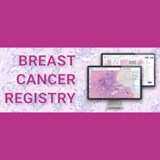
World Tumor Registry has launched its Breast Cancer Registry, an open access digital platform designed to support more accurate breast cancer diagnosis worldwide. The new resource brings together expert reviewed tumour cases, including both common and rare forms, and allows users to study high quality whole slide images alongside clinical, biomarker and molecular information. Led by Dr Edi Brogi of Memorial Sloan Kettering Cancer Center, the project already includes 100 fully annotated cases, with a target of 500 by year end.
The organisation says the registry is intended to help pathologists and trainees around the world learn from a broader range of cases and improve diagnostic confidence. World Tumor Registry also plans to expand further with lung, skin and melanoma registries later thi…
egeneron has entered the fast growing radiopharmaceutical field through a new strategic collaboration with Telix, aiming to develop next generation targeted cancer therapies. The agreement focuses on combining Regeneron’s antibody expertise with Telix’s capabilities in radiopharma, a modality that delivers radiation directly to tumour cells.
Under the terms, the companies will jointly develop and commercialise multiple programmes, sharing costs and profits equally. Regeneron will provide an upfront payment and may contribute significant milestone payments as the collaboration progresses. The partnership also includes the development of diagnostic tools to help identify suitable patients and monitor treatment response.
Radiopharmaceuticals are gaining momentum across the industry due to the…
Bristol Myers Squibb has entered a multi year collaboration with Faro Health to enhance the design and execution of clinical trials using artificial intelligence. The agreement will see the company adopt Faro’s digital protocol platform as a central system for structuring and managing trial protocols across its global development programmes.
The partnership focuses on improving how clinical studies are planned, drafted and optimised, with the aim of increasing efficiency and consistency. By introducing structured data and AI enabled workflows, the companies intend to reduce complexity in protocol development and support faster decision making.
Faro’s technology is designed to standardise protocol design, creating a foundation that can scale AI use across multiple studies. This approach i…

07-Apr-2026
Donald Trump has triggered plans to impose 100% tariffs on some imported pharmaceutical products, citing national security concerns and a desire to boost domestic manufacturing. The proposal would target medicines and raw ingredients sourced largely from countries such as China and India, which currently dominate key segments of the global supply chain.
If a pharmaceutical product is from the European Union, Japan, Korea, or Switzerland and Liechtenstein, a 15% tariff will apply. If a pharmaceutical product is from the United Kingdom, a lower tariff will apply (10%), subject to the recently concluded UK pharmaceutical agreement.
The tariffs will come into effect in 120 days for certain large companies, and 180 days for smaller companies.
The move is intended to reduce US reliance on forei…

Anthropic has acquired biotech startup Coefficient Bio in a deal valued at around 400 million dollars, signaling a major push into healthcare and life sciences. The move brings a small, highly specialised team of computational biology experts into Anthropic’s growing AI division focused on scientific applications.
Coefficient Bio, founded less than a year ago by former Genentech researchers, operated largely in stealth while developing AI tools for drug discovery, research planning and regulatory strategy. Its technology is designed to support complex scientific workflows rather than general chatbot use, aligning with the increasing demand for domain specific AI in pharma and biotech.
The acquisition reflects a broader industry shift as AI companies move beyond general purpose models tow…
Biogen has agreed to acquire Apellis Pharmaceuticals in a transaction valued at approximately 5.6 billion dollars, strengthening its position in immunology and rare disease markets. The deal includes a cash offer of 41 dollars per share along with additional payments linked to future product performance.
The acquisition brings two marketed therapies into Biogen’s portfolio, including a treatment for geographic atrophy and another targeting rare kidney conditions. These medicines generated close to 700 million dollars in annual sales, offering Biogen an immediate revenue boost.
The move aligns with Biogen’s strategy to diversify beyond its core neurology business and expand into nephrology. It also provides commercial infrastructure to support upcoming pipeline assets, including late stage…
Symeres has entered a collaboration with Ambagon Therapeutics to explore molecular glues for colorectal cancer and other diseases that remain difficult to target. The partnership brings together Symeres’ drug discovery and development capabilities with Ambagon’s expertise in this emerging class of small molecules. The work is expected to deepen understanding of how these compounds could help unlock new approaches against challenging cancer targets.
For Symeres, the deal also strengthens its position as a partner for biotech companies pursuing novel modalities. For Ambagon, it adds additional research support as the company advances its oncology focused pipeline. The announcement reflects continued industry interest in molecular glue science as drug developers look for fresh ways to reach t…