
Biotech - Articles
Enzymes play important roles in research and diagnostic applications. Enzymes are natural biological catalysts that accelerate the rate of biochemical reactions, and they are widely used in many different fields. In this article, we have discussed the applications of enzymes in research and diagnostics, as well as some of the most common enzymes used.
Enzymes play important roles in research and diagnostic applications. Enzymes are natural biological catalysts that accelerate the rate of biochemical reactions, and they are widely used in many different fields. In this article, we have discussed the applications of enzymes in research and diagnostics, as well as some of the most common enzymes used. Enzymes have a wide range of applications in research and diagnostics, including but n…
Enzymes play important roles in research and diagnostic applications. Enzymes are natural biological catalysts that accelerate the rate of biochemical reactions, and they are widely used in many different fields. In this article, we have discussed the applications of enzymes in research and diagnostics, as well as some of the most common enzymes used. Enzymes have a wide range of applications in research and diagnostics, including but n…
The chromatin microenvironment is a dynamically balanced system of organismal epigenetic regulation and thus regulation of gene expression. Any heritable modification mechanism in the chromatin can be used as a marker of epigenetic inheritance. The dynamic balance of chromatin is essential to maintain normal cell proliferation, differentiation, metabolism and functional activities.
The chromatin microenvironment is a dynamically balanced system of organismal epigenetic regulation and thus regulation of gene expression. Any heritable modification mechanism in the chromatin can be used as a marker of epigenetic inheritance. The dynamic balance of chromatin is essential to maintain normal cell proliferation, differentiation, metabolism and functional activities. ATAC-seq, ChIP-seq&…
The chromatin microenvironment is a dynamically balanced system of organismal epigenetic regulation and thus regulation of gene expression. Any heritable modification mechanism in the chromatin can be used as a marker of epigenetic inheritance. The dynamic balance of chromatin is essential to maintain normal cell proliferation, differentiation, metabolism and functional activities. ATAC-seq, ChIP-seq&…
Gene transcription requires the unraveling of a higher structural part of the DNA. This part of the chromatin is called accessible chromatin region and this process is achieved mainly by the modification of chromosomal histones (especially acetylation).
Introduction Gene transcription requires the unraveling of a higher structural part of the DNA. This part of the chromatin is called accessible chromatin region and this process is achieved mainly by the modification of chromosomal histones (especially acetylation). The property of chromatin is called chromatin accessibility, so that chromatin accessibility reflects the state of binding of regulatory factors to open chromatin, which is closely related to transcriptional regulation. ATAC-seq technique uses Tn5 transposase to cleave regions o…
Introduction Gene transcription requires the unraveling of a higher structural part of the DNA. This part of the chromatin is called accessible chromatin region and this process is achieved mainly by the modification of chromosomal histones (especially acetylation). The property of chromatin is called chromatin accessibility, so that chromatin accessibility reflects the state of binding of regulatory factors to open chromatin, which is closely related to transcriptional regulation. ATAC-seq technique uses Tn5 transposase to cleave regions o…
Considering that disease-causing and disease-protecting immune cells need to be transferred from lymphatic and secondary lymphoid organs through the peripheral circulation to their sites of action in disease, a clearer picture of the cells and their action gene expression is provided by identifying the components in whole blood. Blood transcriptome sequencing technologies are currently applied to rare disease analysis, immune disease research, and pathogenic infections.
What is Blood Transcriptomics? Considering that disease-causing and disease-protecting immune cells need to be transferred from lymphatic and secondary lymphoid organs through the peripheral circulation to their sites of action in disease, a clearer picture of the cells and their action gene expression is provided by identif…
What is Blood Transcriptomics? Considering that disease-causing and disease-protecting immune cells need to be transferred from lymphatic and secondary lymphoid organs through the peripheral circulation to their sites of action in disease, a clearer picture of the cells and their action gene expression is provided by identif…
Chromatin immunoprecipitation (ChIP) is an effective method for isolating DNA fragments bound to specific proteins in vivo. DNA-binding proteins can be transcription factors (TFs) or other chromatin-associated proteins, such as histones.
What is ChIP Sequencing? Chromatin immunoprecipitation (ChIP) is an effective method for isolating DNA fragments bound to specific proteins in vivo. DNA-binding proteins can be transcription factors (TFs) or other chromatin-associated proteins, such as histones. With the rapid development of DNA sequencing technology, the direct sequencing of DNA fragments obtained in ChIP using high-throughput sequencing is called ChIP-seq. Due to its high resolution and coverage, ChIP-seq has become a popular method for analyzing chromatin modifications and TF bindin…
What is ChIP Sequencing? Chromatin immunoprecipitation (ChIP) is an effective method for isolating DNA fragments bound to specific proteins in vivo. DNA-binding proteins can be transcription factors (TFs) or other chromatin-associated proteins, such as histones. With the rapid development of DNA sequencing technology, the direct sequencing of DNA fragments obtained in ChIP using high-throughput sequencing is called ChIP-seq. Due to its high resolution and coverage, ChIP-seq has become a popular method for analyzing chromatin modifications and TF bindin…
We need to navigate past the lab shortages that have been preventing companies from scaling, and in some cases, blocking access completely for start-ups unable to find space or to meet the spiraling cost of rent. Expanding beyond the established boundaries to encompass more of the country’s scientific potential provides a valuable extension and unlocks further opportunity for growth and success.
The potential of life sciences to deliver game-changing medicines and technology has never been greater. And with discoveries will come high numbers of jobs and significant economic benefits. That is exciting news in a sector that already employs more than 250,000 people, supports 6,500 businesses, and generates an annual turnover of £94bn. (1) With increased funding from UK Life Sciences and the L…
The potential of life sciences to deliver game-changing medicines and technology has never been greater. And with discoveries will come high numbers of jobs and significant economic benefits. That is exciting news in a sector that already employs more than 250,000 people, supports 6,500 businesses, and generates an annual turnover of £94bn. (1) With increased funding from UK Life Sciences and the L…
Discover how Electronic Data Capture (EDC) revolutionizes clinical trials by streamlining data collection, improving accuracy, and ensuring compliance. Explore the advantages of EDC and its impact on efficient clinical research.
Electronic Data Capture (EDC) has transformed the landscape of clinical trials, revolutionizing the way data is collected, managed, and analyzed. This powerful tool offers numerous benefits that not only streamline the process but also enhance the quality and integrity of clinical data. Streamlined Data Collection: EDC simplifies the data collection process by providing a user-friendly interface that eliminates the need for complex programming. Setting up a complete clinical study becomes a matter of days, rather than months. Whether it's paper forms, web forms, o…
Electronic Data Capture (EDC) has transformed the landscape of clinical trials, revolutionizing the way data is collected, managed, and analyzed. This powerful tool offers numerous benefits that not only streamline the process but also enhance the quality and integrity of clinical data. Streamlined Data Collection: EDC simplifies the data collection process by providing a user-friendly interface that eliminates the need for complex programming. Setting up a complete clinical study becomes a matter of days, rather than months. Whether it's paper forms, web forms, o…

Unlock the power of clinical data management for accurate research and better Clinical research outcomes. Discover the key components, technology advancements, and benefits in this essential field.
Introduction: Clinical data management (CDM) plays a crucial role in the Clinical trials industry, ensuring the accuracy, completeness, and security of patient data. However, Clinical data management systems face numerous challenges in keeping up with the increasing volume of data and the evolving demands of clinical trials. This article explores the key challenges faced by CDM systems and discusses future trends that will shape the field. By addressing these challenges and embracing new technologies, Clinical data management systems can improve efficiency, enhance data quality, and ultimately…
Introduction: Clinical data management (CDM) plays a crucial role in the Clinical trials industry, ensuring the accuracy, completeness, and security of patient data. However, Clinical data management systems face numerous challenges in keeping up with the increasing volume of data and the evolving demands of clinical trials. This article explores the key challenges faced by CDM systems and discusses future trends that will shape the field. By addressing these challenges and embracing new technologies, Clinical data management systems can improve efficiency, enhance data quality, and ultimately…

Nano-TiO2 is of great significance for preventing disease transmission, purifying environment, and protecting human health.
Compared with common materials, nanomaterials have a series of excellent properties that make nano-antibacterial agents prepared by nanotechnology have excellent antibacterial effects unmatched by traditional antibacterial agents. Nano antibacterial agents can be divided into two categories according to their mechanism of action on microorganisms: one is photocatalytic semiconductor materials such as nano zinc oxide, Nano-TiO2 (nano titanium dioxide), etc.; the other is antibacterial active metal nanomaterials. As a new type of antibacterial material, nano-TiO2 (nano titanium dioxide) has the advantages of non-toxic, non-irritating, thermal stability, heat re…
Compared with common materials, nanomaterials have a series of excellent properties that make nano-antibacterial agents prepared by nanotechnology have excellent antibacterial effects unmatched by traditional antibacterial agents. Nano antibacterial agents can be divided into two categories according to their mechanism of action on microorganisms: one is photocatalytic semiconductor materials such as nano zinc oxide, Nano-TiO2 (nano titanium dioxide), etc.; the other is antibacterial active metal nanomaterials. As a new type of antibacterial material, nano-TiO2 (nano titanium dioxide) has the advantages of non-toxic, non-irritating, thermal stability, heat re…
In recent years, eProtocol automation has emerged as a powerful tool for streamlining the protocol creation process, reducing errors, and improving efficiency.
Clinical trials are critical for bringing new treatments and therapies to market, but they are also time-consuming, expensive, and complex. Protocol development is a crucial component of the clinical trial process, but it can be a bottleneck that delays study start times. In recent years, eProtocol automation has emerged as a powerful tool for streamlining the protocol creation process, reducing errors, and improving efficiency. Key Features of eProtocol AutomationStandardized Protocol Templates: eProtocol tools offer a library of standardized protocol templates that can be customized to fit the specific needs of each study. These te…
Clinical trials are critical for bringing new treatments and therapies to market, but they are also time-consuming, expensive, and complex. Protocol development is a crucial component of the clinical trial process, but it can be a bottleneck that delays study start times. In recent years, eProtocol automation has emerged as a powerful tool for streamlining the protocol creation process, reducing errors, and improving efficiency. Key Features of eProtocol AutomationStandardized Protocol Templates: eProtocol tools offer a library of standardized protocol templates that can be customized to fit the specific needs of each study. These te…
Enzymes are essential proteins that catalyze biochemical reactions in living organisms. They play critical roles in various metabolic processes, such as digestion, respiration, and biosynthesis. Enzymes can be produced naturally in living cells or can be produced artificially through recombinant DNA technology. Enzyme expression and purification are two critical steps in the production of pure and functional enzymes for various applications.
Enzymes are essential proteins that catalyze biochemical reactions in living organisms. They play critical roles in various metabolic processes, such as digestion, respiration, and biosynthesis. Enzymes can be produced naturally in living cells or can be produced artificially through recombinant DNA technology. Enzyme expression and purification are two…
Enzymes are essential proteins that catalyze biochemical reactions in living organisms. They play critical roles in various metabolic processes, such as digestion, respiration, and biosynthesis. Enzymes can be produced naturally in living cells or can be produced artificially through recombinant DNA technology. Enzyme expression and purification are two…
11-Apr-2023
Enzymes are protein molecules that catalyze chemical reactions in living organisms. They are involved in many metabolic processes and play a critical role in maintaining the health of the body. In recent years, enzymes have been widely used in disease diagnosis, providing a quick and accurate way to detect and monitor diseases.
Enzymes are protein molecules that catalyze chemical reactions in living organisms. They are involved in many metabolic processes and play a critical role in maintaining the health of the body. In recent years, enzymes have been widely used in disease diagnosis, providing a quick and accurate way to detect and monitor diseases. Enzymes for disease diagnosis can be divided into two categories: those that are produced by the body in response to disease and those…
Enzymes are protein molecules that catalyze chemical reactions in living organisms. They are involved in many metabolic processes and play a critical role in maintaining the health of the body. In recent years, enzymes have been widely used in disease diagnosis, providing a quick and accurate way to detect and monitor diseases. Enzymes for disease diagnosis can be divided into two categories: those that are produced by the body in response to disease and those…
DNA modifying enzymes are a group of specialized proteins that play an essential role in the maintenance and expression of genetic information. These enzymes catalyze chemical reactions that modify the structure or sequence of DNA, including replication, repair, recombination, and transcription. In this article, we will explore the importance of DNA modifying enzymes and their potential applications in molecular biology.
DNA modifying enzymes are a group of specialized proteins that play an essential role in the maintenance and expression of genetic information. These enzymes catalyze chemical reactions that modify the structure or sequence of DNA, including replication, repair, recombination, and transcription. In this article, we will explore the importance of DNA modifying enzymes and th…
DNA modifying enzymes are a group of specialized proteins that play an essential role in the maintenance and expression of genetic information. These enzymes catalyze chemical reactions that modify the structure or sequence of DNA, including replication, repair, recombination, and transcription. In this article, we will explore the importance of DNA modifying enzymes and th…
Protein-small molecule docking is a computational technique used to predict the binding mode of a small molecule to a protein. This technique has emerged as a powerful tool in drug discovery and design. Docking services can be used to identify potential drug candidates, optimize the activity and selectivity of drugs, predict the toxicity of drugs, and design new proteins with specific functions.
Protein-small molecule docking is a computational technique used to predict the binding mode of a small molecule to a protein. This technique has emerged as a powerful tool in drug discovery and design. Docking services can be used to identify potential drug candidates, optimize the activity and selectivity of drugs, predict the toxicity of drugs, and design new proteins with specific functions. &nb…
Protein-small molecule docking is a computational technique used to predict the binding mode of a small molecule to a protein. This technique has emerged as a powerful tool in drug discovery and design. Docking services can be used to identify potential drug candidates, optimize the activity and selectivity of drugs, predict the toxicity of drugs, and design new proteins with specific functions. &nb…
Macromolecule/high polymers can be used in surgery, suture, orthopedic fixation and tissue repair. They can also be used as drug carrier materials in drug controlled release systems.
Introduction With the wide application of high polymers, more and more extensive researches on high polymers have been conducted in recent years. Many papers and monographs discussed the important characteristics of high polymers and their important applications in medicine. Macromolecule/high polymers can be used in surgery, suture, orthopedic fixation and tissue repair. They can also be used as drug carrier materials in drug controlled release systems. According to relevant researches, the following describes the important applications of several common polymers in medicine science. 1 Surgical suture Due to i…
Introduction With the wide application of high polymers, more and more extensive researches on high polymers have been conducted in recent years. Many papers and monographs discussed the important characteristics of high polymers and their important applications in medicine. Macromolecule/high polymers can be used in surgery, suture, orthopedic fixation and tissue repair. They can also be used as drug carrier materials in drug controlled release systems. According to relevant researches, the following describes the important applications of several common polymers in medicine science. 1 Surgical suture Due to i…
With the advent of modern health science, these cells have been demonstrated to play a major role in understanding the occurrence of diseases, the generation of advanced regenerative medicines, and the discovery of other drugs.
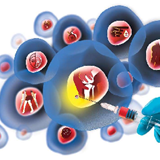
Stem cell therapy is a rapidly developing field in modern medicine that holds great promise for the treatment of various diseases and injuries. Stem cells are unique cells that have the ability to develop into many different cell types in the body. They are also capable of renewing themselves through cell division, making them a valuable tool for repairing damaged tissues and organs. Stem cell therapy involves the use of stem cells to treat or prevent diseases or conditions. These cells can be obtained from a variety of sources, including embryonic tissues, fetal ti…
Stem cell therapy is a rapidly developing field in modern medicine that holds great promise for the treatment of various diseases and injuries. Stem cells are unique cells that have the ability to develop into many different cell types in the body. They are also capable of renewing themselves through cell division, making them a valuable tool for repairing damaged tissues and organs. Stem cell therapy involves the use of stem cells to treat or prevent diseases or conditions. These cells can be obtained from a variety of sources, including embryonic tissues, fetal ti…
04-Apr-2023
With the development of high-resolution mass spectrometry (HMS) and its instruments, the qualitative and quantitative analysis of compound quality determination has received more and more attention and been widely used by researchers. Accurate quality determination is an important biochemical method for the qualitative and quantitative analysis of drugs.
With the development of high-resolution mass spectrometry (HMS) and its instruments, the qualitative and quantitative analysis of compound quality determination has received more and more attention and been widely used by researchers. Accurate quality determination is an important biochemical method for the qualitative and quantitative analysis of drugs. The accurate mass measurement method can determine the accurate quality of a compound i…
With the development of high-resolution mass spectrometry (HMS) and its instruments, the qualitative and quantitative analysis of compound quality determination has received more and more attention and been widely used by researchers. Accurate quality determination is an important biochemical method for the qualitative and quantitative analysis of drugs. The accurate mass measurement method can determine the accurate quality of a compound i…
04-Apr-2023
When the components in the mixture of solutions are moved forward in the mobile phase by the material moving the sample, these components pass through the stationary phase. The difference in size and strength of each component causes the difference in the residence time of the component to flow out of the stationary phase.
The Basic Principles of Chromatography When the components in the mixture of solutions are moved forward in the mobile phase by the material moving the sample, these components pass through the stationary phase. The difference in size and strength of each component causes the difference in the residence time of the component to flow out of the stationary phase. Types of Chromatography According to the different separation mechanisms, chromatography can be divided i…
The Basic Principles of Chromatography When the components in the mixture of solutions are moved forward in the mobile phase by the material moving the sample, these components pass through the stationary phase. The difference in size and strength of each component causes the difference in the residence time of the component to flow out of the stationary phase. Types of Chromatography According to the different separation mechanisms, chromatography can be divided i…
04-Apr-2023
Electrophoresis is a major technique for separating proteins and other substances such as nucleic acids, purines, pyrimidines, some organic compounds, and even inorganic ions. Most of the current electrophoresis is to separate the sample into the mobile phase in an immobilized medium. Polyacrylamide gel is one of the main media. It is a porous gel whose pore size is close to the size of protein molecules, which improves the resolution of proteins. Moreover, the polyacrylamide gel has good chemical stability, strong repeatability, stability to changes in pH and temperature, and easy color observation. SDS polyacrylamide gel electrophoresis (SDS-PAGE) has the advantages of simple operation and good reproducibility in the determination of protein molecular weight, detection of specific proteins, and identification of strain species.
Proteins control all biological systems in the cell. Although many proteins function independently, most proteins need to interact with other proteins to maintain complete biological activity. Therefore, in order to better understand the function and biological characteristics of intracellular proteins, researchers often need to identify and analyze protein-protein interactions. Co-immunoprecipitation and pull-down are two of the most popular techniques for identifying protein-protein interactions because of their robust stability.
Proteins control all biological systems in the cell. Although many proteins function independently, most proteins need to interact with other proteins to maintain complete biological activity. Therefore, in order to better understand the function and biological c…
Proteins control all biological systems in the cell. Although many proteins function independently, most proteins need to interact with other proteins to maintain complete biological activity. Therefore, in order to better understand the function and biological c…
