Biotech - Articles
05-Jul-2022
Penicillinase is an enzyme that acts on the β-lactam ring of penicillin to convert penicillin into penicillic acid, which has no antibacterial activity. A variety of penicillin-resistant bacteria can produce this enzyme, such as the penicillin-resistant strains of Staphylococcusaureus and the penicillin-resistant strains of Bacillus cereus. This enzyme is a medical enzyme suitable for the treatment of allergic reactions to penicillin in general, and can also be used as an adjunctive treatment for patients with anaphylaxis or severe penicillin allergic reactions. Bacillus cereus can be used as a production strain of this enzyme.
Penicillinase is an enzyme that acts on the β-lactam ring of penicillin to convert penicillin into penicillic acid, which has no antibacterial activity. A variety of…
Penicillinase is an enzyme that acts on the β-lactam ring of penicillin to convert penicillin into penicillic acid, which has no antibacterial activity. A variety of…
“I like the excitement of not knowing what’s going to happen and I think I thrive on it.”
For the first interview in our Human Strategy Series, the team recently spoke with Dr Jackie Ameri, CEO of Pancryos, who benefited from our Leadership Assessment service as part of the partnership between Coulter Partners and the BioInnovation Institute (BII). Jackie discusses her early career, her decision to join the BII and highlights the benefits of being part of the BII Creation House Program.
“I like the excitement of not knowing what’s going to happen and I think I thrive on it.” For the first interview in its Human Strategy Series, the Coulter Partners team recently spoke with Dr Jackie Ameri, CEO of Pancryos, who benefited from our Leadership Assessment service as part of the partner…
“I like the excitement of not knowing what’s going to happen and I think I thrive on it.” For the first interview in its Human Strategy Series, the Coulter Partners team recently spoke with Dr Jackie Ameri, CEO of Pancryos, who benefited from our Leadership Assessment service as part of the partner…
10-Jun-2022
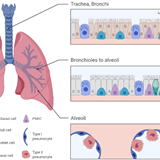
Human pulmonary cells, a mainstay of many medical research labs, have acquired new relevance in the era of COVID-19. As the SARS-CoV-2 virus causes serious complications most commonly in the lungs, human primary pulmonary cells have become increasingly important in the study of this coronavirus strain.
The human respiratory system is composed of a network of tissues and organs that enable the body to absorb oxygen from the air as well as expel carbon dioxide and other waste gasses. These functions are supported by a variety of cells that aid in promoting epithelial homeostasis, preventing alveolar collapse, facilitating the exchange of gasses between the blood and the tissues, and ensuring that the lungs adjust properly to low atmospheric pressure. Primary cells taken directly from the resp…
The human respiratory system is composed of a network of tissues and organs that enable the body to absorb oxygen from the air as well as expel carbon dioxide and other waste gasses. These functions are supported by a variety of cells that aid in promoting epithelial homeostasis, preventing alveolar collapse, facilitating the exchange of gasses between the blood and the tissues, and ensuring that the lungs adjust properly to low atmospheric pressure. Primary cells taken directly from the resp…
In short, different diseased PBMCs were used for a wide variety of immunology-based applications, including in vitro immunoassays, population characterization, sequencing studies, and biologic testing as above.
However, in the application process, attention should be paid to the quality stability, ethical issues of traceability, whether the cells are fresh, the selection of appropriate cells for different studies, etc.
Brief Introduction to PBMCs Peripheral Blood Mononuclear Cells (PBMC), also called Human Mononuclear Cells from Peripheral Blood (HMNC-PB), are cells with a single, round nucleus that are collected from peripheral or circulating blood. These blood cells are a key component in the immune system to fight infections and disease, adapting to invaders. PBMCs resp…
Brief Introduction to PBMCs Peripheral Blood Mononuclear Cells (PBMC), also called Human Mononuclear Cells from Peripheral Blood (HMNC-PB), are cells with a single, round nucleus that are collected from peripheral or circulating blood. These blood cells are a key component in the immune system to fight infections and disease, adapting to invaders. PBMCs resp…
The functions of MSCs mainly include differentiation capacity, immune regulation and antimicrobial properties. Differentiation capacity indicates the identity of MSCs stem cells and makes it become the basis for maintaining organ and tissue survival [16]. MSCs are also involved in immunomodulatory processes. MSCs can affect a variety of innate and specific immune cells and can produce a variety of immune factors. And the antibacterial ability of MSCs mainly comes from their ability to produce a variety of antibacterial peptides, which enables MSCs to have broad-spectrum antibacterial activity.
Introduction What are Stem Cells? Stem cells refer to undifferentiated or partially differentiated cells in multicellular organisms. Stem cells can replicate indefinitely and differentiate into differ…
Introduction What are Stem Cells? Stem cells refer to undifferentiated or partially differentiated cells in multicellular organisms. Stem cells can replicate indefinitely and differentiate into differ…
01-Jun-2022
The degradation pathway of the drug is closely related to the molecular structure of the drug. The ester group or amide bond in the molecular structure may be hydrolyzed under acid-base catalysis conditions.
Benefits of forced degradation test The degradation pathway of the drug is closely related to the molecular structure of the drug. The ester group or amide bond in the molecular structure may be hydrolyzed under acid-base catalysis conditions. Provide support for drug safety. When toxicologically relevant impurities are not readily available, toxicological evaluation of samples degraded to a certain extent can provide a supportive basis for drug safety and impurity limit determination. It is helpful for metabolite research. Some degradation products are also metabolites, and the m…
Benefits of forced degradation test The degradation pathway of the drug is closely related to the molecular structure of the drug. The ester group or amide bond in the molecular structure may be hydrolyzed under acid-base catalysis conditions. Provide support for drug safety. When toxicologically relevant impurities are not readily available, toxicological evaluation of samples degraded to a certain extent can provide a supportive basis for drug safety and impurity limit determination. It is helpful for metabolite research. Some degradation products are also metabolites, and the m…
Long non-coding RNAs (lncRNAs) are a class of RNAs that do not code for proteins and are typically greater than 200 nucleotides in length. Studies have shown that lncRNAs are quite complex in function and play an important role in various biological processes such as development, differentiation, proliferation, metastasis, apoptosis, stem cell pluripotency, and DNA damage. Therefore, those non-coding fragments in human genes are also vital and not the so-called "transcriptional noise".
Long non-coding RNAs (lncRNAs) are a class of RNAs that do not code for proteins and are typically greater than 200 nucleotides in length. Studies have shown that lncRNAs are quite complex in function and play an important role in various biological processes such as development, differentiation, proliferatio…
Long non-coding RNAs (lncRNAs) are a class of RNAs that do not code for proteins and are typically greater than 200 nucleotides in length. Studies have shown that lncRNAs are quite complex in function and play an important role in various biological processes such as development, differentiation, proliferatio…
Since the completion of the Human Genome Project, genomics has played an increasingly critical role in the biomedical field. Its applications include variation and risk assessment in disease genomics, analysis of changes in transcriptomic gene expression, revealing epigenetic effects on tissue and organ development, and heterogeneity at the single-cell level, among others. We present the application of bioinformatics in the study and fight against cancer and infectious diseases.
Introduction Since the completion of the Human Genome Project, genomics has played an increasingly critical role in the biomedical field. Its applications include variation and risk assessment in disease genomics, analysis of changes in transcriptomic gene expression, revealing epigenetic effects on tissue and organ…
Introduction Since the completion of the Human Genome Project, genomics has played an increasingly critical role in the biomedical field. Its applications include variation and risk assessment in disease genomics, analysis of changes in transcriptomic gene expression, revealing epigenetic effects on tissue and organ…
With the development of biotechnology in the modern information age, the research, development and utilization of enzymes have become more and more in-depth, and correspondingly, the application of enzymes in medicine has become more and more extensive.
With the development of biotechnology in the modern information age, the research, development and utilization of enzymes have become more and more in-depth, and correspondingly, the application of enzymes in medicine has become more and more extensive. The relationship between enzymes and certain diseases The diseases caused by the lack of enzymes in the human body are mostly congenital or hereditary. For example, albinism is caused by the lack of tyrosine hydroxylase, and patients with broad bean disease or sensitivity to primaqui…
With the development of biotechnology in the modern information age, the research, development and utilization of enzymes have become more and more in-depth, and correspondingly, the application of enzymes in medicine has become more and more extensive. The relationship between enzymes and certain diseases The diseases caused by the lack of enzymes in the human body are mostly congenital or hereditary. For example, albinism is caused by the lack of tyrosine hydroxylase, and patients with broad bean disease or sensitivity to primaqui…
26-May-2022
The biological function of restriction enzymes is derived from the defense of foreign DNA from invading cells. The restriction-modification system of bacteria makes the DNA bases of bacteria to be methylated and modified, so that they are not recognized and cut by their own restriction enzymes.
The biological function of restriction enzymes is derived from the defense of foreign DNA from invading cells. The restriction-modification system of bacteria makes the DNA bases of bacteria to be methylated and modified, so that they are not recognized and cut by their own restriction enzymes. The development of restriction endonucleases In the early 1960s, Werner Arber came up with the idea that there was an enzyme that would cut the DNA of a virus, thereby limiting the virus' proliferation.…
The biological function of restriction enzymes is derived from the defense of foreign DNA from invading cells. The restriction-modification system of bacteria makes the DNA bases of bacteria to be methylated and modified, so that they are not recognized and cut by their own restriction enzymes. The development of restriction endonucleases In the early 1960s, Werner Arber came up with the idea that there was an enzyme that would cut the DNA of a virus, thereby limiting the virus' proliferation.…
25-May-2022
Mitochondria are important organelles of eukaryotic cells and play a key role in the regulation of cellular energy metabolism, biosynthesis and cell death (including apoptosis and programmed cell necrosis). In addition, mitochondria are involved in important physiological processes such as tricarboxylic acid cycle, fatty acid and amino acid oxidation, and regulation of calcium ion homeostasis. Since mitochondria play an important role in the maintenance of homeostasis, their abnormal function is associated with many human diseases, such as neurodegenerative diseases, cancer, heart disease and diabetes.
Mitochondria are important organelles of eukaryotic cells and play a key role in the regulation of cellular energy metabolism, biosynthesis and cell death (including apoptosis and programmed…
Mitochondria are important organelles of eukaryotic cells and play a key role in the regulation of cellular energy metabolism, biosynthesis and cell death (including apoptosis and programmed…
25-May-2022
Luminex xMAP technology uses polystyrene microspheres of 5.6 microns in diameter dyed with different ratios of two red-sorting fluorescent dyes to obtain up to 100 fluorescent coded microspheres. Antibody molecules or gene probes for different test items are covalently cross-linked to specific coded microspheres, each of which corresponds to a specific test item.
Principle of Luminex Multiplex Assay Luminex xMAP technology uses polystyrene microspheres of 5.6 microns in diameter dyed with different ratios of two red-sorting fluorescent dyes to obtain up to 100 fluorescent coded microspheres. Antibody molecules or gene probes for different test items are covalently cross-linked to specific coded microspheres, each of which corresponds to a specific test item. The fluorescent coding microsphe…
Principle of Luminex Multiplex Assay Luminex xMAP technology uses polystyrene microspheres of 5.6 microns in diameter dyed with different ratios of two red-sorting fluorescent dyes to obtain up to 100 fluorescent coded microspheres. Antibody molecules or gene probes for different test items are covalently cross-linked to specific coded microspheres, each of which corresponds to a specific test item. The fluorescent coding microsphe…
The pharmaceutical and biopharmaceutical industries have been seeing a trend towards single-use technologies. However, this new approach and the introduction and advance of personalized therapies are currently leading to massive supply-chain delays in terms of single-use consumables. Therefore, new solutions have to be found and companies have to think strategically and change up processes as soon as possible.
As there is an upward trend to single-use technologies, strategic thinking and the courage to change up processes are called for in the pharma industry. The pharmaceutical and biopharmaceutical industries are seeing a major shift to disposable technologies. However, this shift and the introduction and advance of personalized and allogeneic therapies are currently leading to massive su…
As there is an upward trend to single-use technologies, strategic thinking and the courage to change up processes are called for in the pharma industry. The pharmaceutical and biopharmaceutical industries are seeing a major shift to disposable technologies. However, this shift and the introduction and advance of personalized and allogeneic therapies are currently leading to massive su…
A successful hit identification campaign relies on the use of a high-quality, diverse library of potential compounds to be screened, but also on capitalizing on other complementary techniques, such as structure-based virtual screening (SBVS) and fragment-based screening.
The major preclinical phases of peptide drug discovery encompass initial target identification and validation, hit identification, high throughput screening, lead optimization, etc. Among them, hit identification is one of the most critical steps in identifying peptides that can interact with well-validated targets. Hit identification (HI) follows the process of target validation, in which the compound screening assays are developed. The main goal of the HI process is to apply the most suitable hit finding approaches…
The major preclinical phases of peptide drug discovery encompass initial target identification and validation, hit identification, high throughput screening, lead optimization, etc. Among them, hit identification is one of the most critical steps in identifying peptides that can interact with well-validated targets. Hit identification (HI) follows the process of target validation, in which the compound screening assays are developed. The main goal of the HI process is to apply the most suitable hit finding approaches…
SolasCure, a Cambridge-based biotech company developing revolutionary wound-cleaning technology, has seen its first trial patient receive treatment.
SolasCure, a Cambridge-based biotech company developing revolutionary wound-cleaning technology, has seen its first trial patient receive treatment. Leveraging biomimicry and evidence-based medicine, the pioneering biologics company is developing its first investigational product, Aurase Wound Gel, a hydrogel containing an enzyme cloned from medical maggots, which aims to accelerate wound cleaning and support healthcare professionals treating patients with chronic wounds. A chronic venous leg ulcer patient attending one of the research clinics involved in SolasCure's CLEANVLU trial has become the first in the world to receive the…
SolasCure, a Cambridge-based biotech company developing revolutionary wound-cleaning technology, has seen its first trial patient receive treatment. Leveraging biomimicry and evidence-based medicine, the pioneering biologics company is developing its first investigational product, Aurase Wound Gel, a hydrogel containing an enzyme cloned from medical maggots, which aims to accelerate wound cleaning and support healthcare professionals treating patients with chronic wounds. A chronic venous leg ulcer patient attending one of the research clinics involved in SolasCure's CLEANVLU trial has become the first in the world to receive the…

05-May-2022
Pharmaceutical excipients can be classified into natural, semi-synthetic and fully synthetic compounds according to their sources.
Pharmaceutical excipients refer to the substances used in the production and formulation of medicines. They perform multiple functions in pharmaceutical preparations and are likely to affect the quality, safety and effectiveness of drugs. Pharmaceutical excipients can be classified into natural, semi-synthetic and fully synthetic compounds according to their sources. And based on their use, excipients can be divided into diluents, binders, disintegrants, lubricants, glidants and anti-caking agents, wetting agents and solubilizers. Among all varieties of excipients, how to select the most appropriate ones for a specific drug formulation project? The guidelines be…
Pharmaceutical excipients refer to the substances used in the production and formulation of medicines. They perform multiple functions in pharmaceutical preparations and are likely to affect the quality, safety and effectiveness of drugs. Pharmaceutical excipients can be classified into natural, semi-synthetic and fully synthetic compounds according to their sources. And based on their use, excipients can be divided into diluents, binders, disintegrants, lubricants, glidants and anti-caking agents, wetting agents and solubilizers. Among all varieties of excipients, how to select the most appropriate ones for a specific drug formulation project? The guidelines be…
Since the peptide library provides a powerful tool for drug development, protein-protein interactions, and other biochemical as well as pharmaceutical applications, the total peptide library becomes a productive tool as it enjoys higher stability because of the special structure of the peptide bond. Additionally, its construction cycle is relatively short compared with traditional peptide library construction technologies, accelerating the development of peptides drugs.
Peptides with low molecular weight have been known to be less allergenic and the diverse physiological roles of peptides make them suitable candidates for the development of therapeutic agents. Peptide drugs are widely used in the prevention, diagnosis, and treatment of diseases such as cancer, diabetes, and AIDS. However, t…
Peptides with low molecular weight have been known to be less allergenic and the diverse physiological roles of peptides make them suitable candidates for the development of therapeutic agents. Peptide drugs are widely used in the prevention, diagnosis, and treatment of diseases such as cancer, diabetes, and AIDS. However, t…
Peptide plays a key role in basic biochemical and physiological processes, and it is essential to many aspects of biomedical research, especially when the pharmaceutical industry continues to apply new drug candidates in the biological field. Therefore, rapid, efficient, and reliable methodology for the chemical synthesis of peptide drugs is of utmost interest in chemical biology research.
Peptide plays a key role in basic biochemical and physiological processes, and it is essential to many aspects of biomedical research, especially when the pharmaceutical industry continues to apply new drug candidates in the biological field. Therefore, rapid, efficient, and reliable methodology for the chemical synthesis of peptide drugs is of utmost interest in chemical biology research. In gener…
Peptide plays a key role in basic biochemical and physiological processes, and it is essential to many aspects of biomedical research, especially when the pharmaceutical industry continues to apply new drug candidates in the biological field. Therefore, rapid, efficient, and reliable methodology for the chemical synthesis of peptide drugs is of utmost interest in chemical biology research. In gener…
Protein structure analysis is one of the core contents of protein engineering. It mainly collects a large amount of protein molecular structure information in order to establish a database of the relationship between structure and function, thereby laying a foundation for theoretical research on the relationship between protein structure and function. Protein structure analysis is of great significance for the strategic consideration and specific approach selection of protein engineering aiming at designing and constructing novel proteins.
Protein structure analysis is one of the core contents of protein engineering. It mainly collects a large amount of protein molecular structure information in order to establish a database of the relationship between structure and function, thereby laying…
Protein structure analysis is one of the core contents of protein engineering. It mainly collects a large amount of protein molecular structure information in order to establish a database of the relationship between structure and function, thereby laying…
“I like the excitement of not knowing what’s going to happen and I think I thrive on it.”
For the first interview in our Human Strategy Series, the team recently spoke with Dr Jackie Ameri, CEO of Pancryos, who benefited from our Leadership Assessment service as part of the partnership between Coulter Partners and the BioInnovation Institute (BII). Jackie discusses her early career, her decision to join the BII and highlights the benefits of being part of the BII Creation House Program.
“I like the excitement of not knowing what’s going to happen and I think I thrive on it.” For the first interview in our Human Strategy Series, the team recently spoke with Dr Jackie Ameri, CEO of Pancryos, who benefited from our Leadership Assessment service as part of the partnership between Coulter P…
“I like the excitement of not knowing what’s going to happen and I think I thrive on it.” For the first interview in our Human Strategy Series, the team recently spoke with Dr Jackie Ameri, CEO of Pancryos, who benefited from our Leadership Assessment service as part of the partnership between Coulter P…