Biotech - Articles
Gaining prompt and profitable market access for the latest drugs is challenging. Competition for advanced treatments is increasing, yet the products are more tightly targeted and more expensive to develop which has an impact on the available market size and ROI. Here, Jean-Luc Taborin of ProductLife Consulting proposes 5 steps biotechs and biopharma companies can take to accelerate the delivery of commercially-viable next-generation treatments to the patients who need them.
Next-generation biopharma products are entering the market in growing volumes, meaning that biotechs are in competition with more established pharma companies for market access and the best pricing and reimbursement terms, despite limited resources. Compared to traditional blockbuster drugs, these novel treatments are mo…
Next-generation biopharma products are entering the market in growing volumes, meaning that biotechs are in competition with more established pharma companies for market access and the best pricing and reimbursement terms, despite limited resources. Compared to traditional blockbuster drugs, these novel treatments are mo…

The basic technology of genetic engineering is artificial cutting, splicing, and combination of genes. A gene is a DNA molecule with a certain function. To accurately cut out the DNA linear molecular fragments of different genes, various restriction endonucleases are required. To connect different fragments together, DNA ligase is required. To synthesize a gene or one of its fragments, DNA polymerase is required. Therefore, enzymes are indispensable tools in DNA recombination technology, and the enzymes used in genetic engineering are collectively referred to as tool enzymes.
The basic technology of genetic engineering is artificial cutting, splicing, and combination of genes. A gene is a DNA molecule with a certain function. To accurately cut out the DNA linear molecular fragments of diffe…
The basic technology of genetic engineering is artificial cutting, splicing, and combination of genes. A gene is a DNA molecule with a certain function. To accurately cut out the DNA linear molecular fragments of diffe…
There are non-functional excipients and functional excipients. The choice of excipients for oral solid preparations is affected by factors such as the pharmacological and chemical properties of the raw materials, the preparation process and the price of excipients.
Excipients are the general term for all materials in the prescription except the main active ingredients, such as binders, disintegrants, lubricants, fillers, etc. The choice of excipients for oral solid preparations is affected by factors such as the pharmacological and chemical properties of the raw materials, the preparation process and the price of excipients. There are non-functional excipients and functional excipients. Let’s take a look at the non-functional excipients that are commonly used in solid oral preparations. Dis…
Excipients are the general term for all materials in the prescription except the main active ingredients, such as binders, disintegrants, lubricants, fillers, etc. The choice of excipients for oral solid preparations is affected by factors such as the pharmacological and chemical properties of the raw materials, the preparation process and the price of excipients. There are non-functional excipients and functional excipients. Let’s take a look at the non-functional excipients that are commonly used in solid oral preparations. Dis…
24-Sep-2021
Annotating CRFs (Case Report Forms) is an important, but almighty task. You need to manually create annotations for every single form. Then convert your forms into PDF. That’s a lot of time and resources. But you don’t need to do it the hard way… Read the article "Why switch to automated CRF annotations?" to find out how!
What’s the deal with annotated CRFs? To put it simply, annotated CRFs document the location in a database of the data collected for each question on a form. Or put another way, it’s a mapping between each item on a form to its corresponding variable contained within the corresponding dataset. Annotated CRFs are part of the mandatory CDISC submission deliverables to the FDA. So they’re a MUST! They provide traceability. They help FDA reviewers find the origin of v…
What’s the deal with annotated CRFs? To put it simply, annotated CRFs document the location in a database of the data collected for each question on a form. Or put another way, it’s a mapping between each item on a form to its corresponding variable contained within the corresponding dataset. Annotated CRFs are part of the mandatory CDISC submission deliverables to the FDA. So they’re a MUST! They provide traceability. They help FDA reviewers find the origin of v…

Leukemia cell lines are important and widely used research tools. Their usefulness is mainly connected with their ability to provide an indefinite source of biological material for experimental purposes. Due to their high relevance for human disease, easy manipulation, and relative low costs, leukemia cell lines continue to represent vital in vitro model systems for a large range of ongoing investigations, especially basic leukemia research and drug discovery.
Leukemia cell lines are important and widely used research tools. Their usefulness is mainly connected with their ability to provide an indefinite source of biological material for experimental purposes. Due to their high relevance for human disease, easy manipulation, and relative low costs, leukemia cell lines continu…
Leukemia cell lines are important and widely used research tools. Their usefulness is mainly connected with their ability to provide an indefinite source of biological material for experimental purposes. Due to their high relevance for human disease, easy manipulation, and relative low costs, leukemia cell lines continu…
The SH-SY5Y cell line is in the widespread use in experimental neurological studies, including the analysis of neuronal differentiation, metabolism, functions related to neurodegenerative and neuroadaptive processes, neurotoxicity, and neuroprotection.
Background SH-SY5Y cells, the subline of the parental line SK-N-SH cells, are originally established from a bone marrow biopsy of a neuroblastoma patient with sympathetic adrenergic ganglial origin. SK-N-SH were subcloned three times: first to SH-SY, and then to SH-SY5, finally to SH-SY5Y. SH-SY5Y were deposited to the ATCC® in 1970 by June L. Biedler. Once the primary mammalian neurons derived from embryonic central nervous system tissue terminally differentiate into mature neurons, the cells can be no longer propagated. While…
Background SH-SY5Y cells, the subline of the parental line SK-N-SH cells, are originally established from a bone marrow biopsy of a neuroblastoma patient with sympathetic adrenergic ganglial origin. SK-N-SH were subcloned three times: first to SH-SY, and then to SH-SY5, finally to SH-SY5Y. SH-SY5Y were deposited to the ATCC® in 1970 by June L. Biedler. Once the primary mammalian neurons derived from embryonic central nervous system tissue terminally differentiate into mature neurons, the cells can be no longer propagated. While…
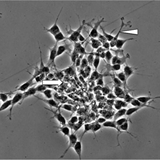
Human primary cardiomyocyte-based models are superior to whether artificial cellular models or animal models due to their native physiological and pharmacological properties. Therefore, human primary cardiomyocytes have the potential to become the most clinically relevant model for developing novel cardiac drugs and predicting safety assessment of new drugs.
What are Human Cardiomyocytes? The heart is one of the first organs formed in the embryo, which highlights its crucial function in pumping blood to carry oxygen and nutrients to other tissues of the organism whether during development or in later life. Human primordial heart starts to beat at around 22 days after fertilization. It is the presence of cardiomyocytes that results in the early beating of the heart. Cardiomyocytes,…
What are Human Cardiomyocytes? The heart is one of the first organs formed in the embryo, which highlights its crucial function in pumping blood to carry oxygen and nutrients to other tissues of the organism whether during development or in later life. Human primordial heart starts to beat at around 22 days after fertilization. It is the presence of cardiomyocytes that results in the early beating of the heart. Cardiomyocytes,…
27-Aug-2021
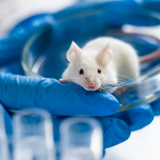
Animal primary cells are isolated directly from healthy or diseased tissue via an enzymatic, chemical, or mechanical process. These cells can be taken from the animal’s kidney, liver, skin, or another organ. Once removed from the in vivo environment, these cells are then placed in an artificial (in vitro) environment for propagation.
Animal Primary Cells Animal primary cells are isolated directly from healthy or diseased tissue via an enzymatic, chemical, or mechanical process. These cells can be taken from the animal’s kidney, liver, skin, or another organ. Once removed from the in vivo environment, these cells are then placed in an artificial (in vitro) environment for propagation. When in an in vitro environment, animal cells must be carefully cultured. This includes ensu…
Animal Primary Cells Animal primary cells are isolated directly from healthy or diseased tissue via an enzymatic, chemical, or mechanical process. These cells can be taken from the animal’s kidney, liver, skin, or another organ. Once removed from the in vivo environment, these cells are then placed in an artificial (in vitro) environment for propagation. When in an in vitro environment, animal cells must be carefully cultured. This includes ensu…
27-Aug-2021
Stem cells are primitive, undifferentiated cells that can potentially turn into a wide variety of cell types. Liver cells, blood cells, and muscle cells are only a few of the specialized types that have their origin in stem cells. Aside from their ability to differentiate into cells with specific functions, they can also divide or renew themselves indefinitely.
Stem cells are primitive, undifferentiated cells that can potentially turn into a wide variety of cell types. Liver cells, blood cells, and muscle cells are only a few of the specialized types that have their origin in stem cells. Aside from their ability to differentiate into cells with specific functions, they can also divide or renew themselves indefinitely. Because they can repair and regenerate damaged tissue…
Stem cells are primitive, undifferentiated cells that can potentially turn into a wide variety of cell types. Liver cells, blood cells, and muscle cells are only a few of the specialized types that have their origin in stem cells. Aside from their ability to differentiate into cells with specific functions, they can also divide or renew themselves indefinitely. Because they can repair and regenerate damaged tissue…
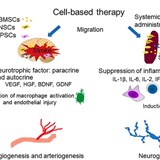
BM-MNCs, the heterogeneous cell mixture, are widely used in cell-based therapy and regenerative medicine, which can promote distinct angiogenic properties, mediate vascular repair, express several cytoprotective growth factors and cytokines and restore pathologically altered genes after ischemic injury. BM-MNCs can be prepared rapidly within a few hours and be collected autologously just prior to administration, which could be advantageous in acute clinical care settings, compared with other cell sources, such as stem cells requiring a period of cell culture before transplantation.
Cell therapy has been identified as an effective method to regenerate damaged tissue. Bone marrow-derived mononuclear cells (BM-MNCs) were first reported on a therapeutic angiogenesis for…
Cell therapy has been identified as an effective method to regenerate damaged tissue. Bone marrow-derived mononuclear cells (BM-MNCs) were first reported on a therapeutic angiogenesis for…
27-Aug-2021
The liquid dosage form for oral administration for children not only has benefits like large dispersion and fast absorption, but also can improve the bioavailability of some drugs, which has a greater development prospect and clinical application value.
Solid preparations for oral administration for children have the advantages of convenient carrying and good stability, but for children, they are prone to dysphagia. The liquid dosage form for oral administration for children not only has benefits like large dispersion and fast absorption, but also can improve the bioavailability of some drugs, which has a greater development prospect and clinical application value. However, there are some technical difficulties that hinder the development of children's oral liquid preparations. Poor solubil…
Solid preparations for oral administration for children have the advantages of convenient carrying and good stability, but for children, they are prone to dysphagia. The liquid dosage form for oral administration for children not only has benefits like large dispersion and fast absorption, but also can improve the bioavailability of some drugs, which has a greater development prospect and clinical application value. However, there are some technical difficulties that hinder the development of children's oral liquid preparations. Poor solubil…
26-Aug-2021
Pharmaceutical organisations in China are increasingly looking abroad for new markets, boosted by their Government’s strong support for businesses that invest overseas. The country is now the world’s second-largest pharma market, behind only the US, and produces around 40 per cent of the world’s active pharmaceutical ingredients.
Pharmaceutical organisations in China are increasingly looking abroad for new markets, boosted by their Government’s strong support for businesses that invest overseas. The country is now the world’s second-largest pharma market, behind only the US, and produces around 40 per cent of the world’s active pharmaceutical ingredients. And with the domestic market also moving from traditional generic medicines to more innovative therapies, Chinese pharma firms are keen t…
Pharmaceutical organisations in China are increasingly looking abroad for new markets, boosted by their Government’s strong support for businesses that invest overseas. The country is now the world’s second-largest pharma market, behind only the US, and produces around 40 per cent of the world’s active pharmaceutical ingredients. And with the domestic market also moving from traditional generic medicines to more innovative therapies, Chinese pharma firms are keen t…

20-Aug-2021
With the increasing supply of good quality fresh and cryo-preserved human hepatocytes (such as ABC-TC3646, AcceGen advanced technology), researchers can further apply this in vitro model to advance our knowledge of liver functions, the mechanisms underlying the regulation and drug-induced changes of metabolic enzyme expression and hepatocellular integrity.
Hepatocytes are parenchymal cells that constitute as much as 80% of the total liver volume and mediate a number of vital liver functions, such as the control of lipid and carbohydrate homeostasis, the synthesis of various proteins, the storage of vitamins, the processing of bile, immunological defense, and the biotransformation of endogenous molecules and xenobiotics [1]. Human hepatocytes directly reflect the specific metabolism and func…
Hepatocytes are parenchymal cells that constitute as much as 80% of the total liver volume and mediate a number of vital liver functions, such as the control of lipid and carbohydrate homeostasis, the synthesis of various proteins, the storage of vitamins, the processing of bile, immunological defense, and the biotransformation of endogenous molecules and xenobiotics [1]. Human hepatocytes directly reflect the specific metabolism and func…
20-Aug-2021
A brief introduction to human tumor cell lines.
History, benefits and applications of human cancer cell lines.
Tumor cell lines (or cancer cell lines) are derived from the cancerous growths on an organ in a human or animal subject. These cell lines have undergone laboratory modifications that render them immortalized—they are capable of proliferating indefinitely in an in vitro environment. For that reason, tumor cell lines have become invaluable tools in the field of cancer research. History of Human Cancer Cell Lines In the first half of the 20th century, various experiments demonstrated that animal cell lines could be maintained in an in vitro environment. The first human cell line was established in 1951, from cervical carcinoma cells taken from 30-year-old H…
Tumor cell lines (or cancer cell lines) are derived from the cancerous growths on an organ in a human or animal subject. These cell lines have undergone laboratory modifications that render them immortalized—they are capable of proliferating indefinitely in an in vitro environment. For that reason, tumor cell lines have become invaluable tools in the field of cancer research. History of Human Cancer Cell Lines In the first half of the 20th century, various experiments demonstrated that animal cell lines could be maintained in an in vitro environment. The first human cell line was established in 1951, from cervical carcinoma cells taken from 30-year-old H…
20-Aug-2021
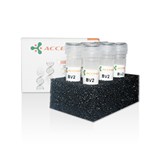
BV-2 shares properties with body macrophages with respect to the antigen profile, their phagocytic capacity and antimicrobial activity. BV-2 is widely used as an alternative model system for primary microglia and neurodegenerative disease model in vitro. The model is usually induced by Lipopolysaccharide (LPS) treatment.
BV-2 Cells Derivation and biomarker BV-2 is a type of microglial cell derived from C57/BL6 murine. The BV2 cells are immortalized by v-raf /v-myc carrying J2 retrovirus. BV2 express nuclear v-myc and the cytoplasmic v-raf oncogene products as well as the env gp70 antigen at the surface level. BV2 microglia cell line retains microglia morphological and functional characteristics. In accordance with v-raf/v-myc expressed characters, the metabolic and proliferation rate of in…
BV-2 Cells Derivation and biomarker BV-2 is a type of microglial cell derived from C57/BL6 murine. The BV2 cells are immortalized by v-raf /v-myc carrying J2 retrovirus. BV2 express nuclear v-myc and the cytoplasmic v-raf oncogene products as well as the env gp70 antigen at the surface level. BV2 microglia cell line retains microglia morphological and functional characteristics. In accordance with v-raf/v-myc expressed characters, the metabolic and proliferation rate of in…
05-Aug-2021
With its unique manufacturing technology, 3D printing allows us to produce unprecedented types of items.
With its unique manufacturing technology, 3D printing allows us to produce unprecedented types of items. However, the real advantage of 3D printing technology lies in its printing materials. Only by developing more new materials can the application fields of 3D printing technology be expanded. At present, 3D printing materials mainly include engineering plastics, photosensitive resins, rubber materials, metal materials, and ceramic materials. In addition, food materials such as colored plaster materials, artificial bone meal, cellular biological materials, and sugar can also be used in the field of 3D printing. What kind of polymer materials can be used in 3D Printing? Engineering plasti…
With its unique manufacturing technology, 3D printing allows us to produce unprecedented types of items. However, the real advantage of 3D printing technology lies in its printing materials. Only by developing more new materials can the application fields of 3D printing technology be expanded. At present, 3D printing materials mainly include engineering plastics, photosensitive resins, rubber materials, metal materials, and ceramic materials. In addition, food materials such as colored plaster materials, artificial bone meal, cellular biological materials, and sugar can also be used in the field of 3D printing. What kind of polymer materials can be used in 3D Printing? Engineering plasti…
Disintegration is an early way to evaluate whether a drug is effective. The disintegration time is an important control index for tablets, capsules, and dripping pills. Disintegration means that the solid preparation disintegrates and dissolves or breaks into granules under specified conditions.
Disintegration is an early way to evaluate whether a drug is effective. The disintegration time is an important control index for tablets, capsules, and dripping pills. Disintegration means that the solid preparation disintegrates and dissolves or breaks into granules under specified conditions. Except for insoluble coating materials or broken capsule shells, all solid preparations should pass through the screen. Therefore, a disintegration test should be carried out to make sure that a drug is rele…
Disintegration is an early way to evaluate whether a drug is effective. The disintegration time is an important control index for tablets, capsules, and dripping pills. Disintegration means that the solid preparation disintegrates and dissolves or breaks into granules under specified conditions. Except for insoluble coating materials or broken capsule shells, all solid preparations should pass through the screen. Therefore, a disintegration test should be carried out to make sure that a drug is rele…
There are two types of enzymes produced by biological cells: one type of enzymes that are produced inside the cell and then secreted outside the cell for action, called extracellular enzymes. Most of these enzymes are hydrolases. For example, the two amylases used in enzymatic production of glucose are secreted by Bacillus subtilis and root enzymes during fermentation. Such enzymes are generally high in content and easy to obtain.
There are two types of enzymes produced by biological cells: one type of enzymes that are produced inside the cell and then secreted outside the cell for action, called extracellular enzymes. Most of these enzymes are hydrolases. For example, the two amylases used in enzymatic production of glucose are secreted by Bacillus subtilis and root enzymes during fermenta…
There are two types of enzymes produced by biological cells: one type of enzymes that are produced inside the cell and then secreted outside the cell for action, called extracellular enzymes. Most of these enzymes are hydrolases. For example, the two amylases used in enzymatic production of glucose are secreted by Bacillus subtilis and root enzymes during fermenta…
The factors that affect enzyme catalysis (that is, enzyme activity) will definitely affect the rate of enzymatic reactions, but the factors that affect the rate of enzymatic reactions do not necessarily affect the catalysis. pH, temperature, ultraviolet light, heavy metal salts, inhibitors, activators, etc. will affect the catalysis and the rate of enzymatic reactions. The concentration of the enzyme, the concentration of the substrate, etc. will not affect the enzyme catalysis, but can affect the rate of the enzymatic reaction.
The factors that affect enzyme catalysis (that is, enzyme activity) will definitely affect the rate of enzymatic reactions, but the factors that affect the rate of enzymatic reactions do not necessarily affect the catalysis. pH, temperature, ultraviolet light, heav…
The factors that affect enzyme catalysis (that is, enzyme activity) will definitely affect the rate of enzymatic reactions, but the factors that affect the rate of enzymatic reactions do not necessarily affect the catalysis. pH, temperature, ultraviolet light, heav…
Helicobacter pylori (Hp) is closely related to the occurrence and development of gastric cancer, peptic ulcer, Hp-related dyspepsia and other diseases. Studies have found that Hp can cause gastric microbial disorders, change the microbial diversity and community structure in the stomach, and cause precancerous lesions. The public health community has made great efforts to eradicate Hp for a long time, but the current Hp infection rate in the entire population is still over 50%. In recent years, probiotics have attracted attention due to their relative safety, and microecological therapy has brought new ideas for the treatment of Hp.
Helicobacter pylori (Hp) is closely related to the occurrence and development of gastric cancer, peptic ulcer, Hp-related dyspepsia and other diseases. Studies…
Helicobacter pylori (Hp) is closely related to the occurrence and development of gastric cancer, peptic ulcer, Hp-related dyspepsia and other diseases. Studies…