
Clinical research - Articles
29-Mar-2022
Cytokines are classified according to their different roles in the inflammatory response: pro-inflammatory cytokines and anti-inflammatory cytokines.
Cytokines are classified according to their different roles in the inflammatory response: pro-inflammatory cytokines and anti-inflammatory cytokines. Pro-inflammatory Cytokines Interleukin-1 (IL-1) IL-1 is a proinflammatory cytokine that activates a variety of immune and inflammatory cells and is secreted mainly by monocytes/macrophages, neutrophils and endothelial cells. IL-1 consists of two genetically encoded peptide molecules, IL-1α and IL-1β, both with a molecular mass of about 17 ku, the former being secreted, while the latter is mostly cell bound. IL-1β stimulates the production of other CK and inflammatory transmitters th…
Cytokines are classified according to their different roles in the inflammatory response: pro-inflammatory cytokines and anti-inflammatory cytokines. Pro-inflammatory Cytokines Interleukin-1 (IL-1) IL-1 is a proinflammatory cytokine that activates a variety of immune and inflammatory cells and is secreted mainly by monocytes/macrophages, neutrophils and endothelial cells. IL-1 consists of two genetically encoded peptide molecules, IL-1α and IL-1β, both with a molecular mass of about 17 ku, the former being secreted, while the latter is mostly cell bound. IL-1β stimulates the production of other CK and inflammatory transmitters th…
29-Mar-2022
Exosomes, a tiny membrane vesicle with a lipid bilayer structure, are secreted by most cells and are approximately 40-200 nm in diameter. exosomes are found in body fluids, including blood, saliva, urine and breast milk. exosomes of different tissue origins differ in content composition and function, and this difference is dynamically regulated by the extracellular matrix and microenvironment. Exosomes secreted by host cells or tumor cells are involved in tumorigenesis, growth, invasion and metastasis. The analysis and detection of exosomes can assist in early diagnosis, efficacy evaluation and prognostic analysis of the disease.
What are exosomes? Exosomes, a tiny membrane vesicle with a lipid bilayer structure, are secreted by most cells and are approximately 40-200 nm in diameter. exosom…
What are exosomes? Exosomes, a tiny membrane vesicle with a lipid bilayer structure, are secreted by most cells and are approximately 40-200 nm in diameter. exosom…
Drug Regulatory Affairs, or DRAs, are responsible for icing that new medicines meet safety and efficacity norms. They also make sure that the medicine information is accurate and over to date before the medicine can be retailed.
What's Regulatory Affairs? Medicine Regulatory Affairs is the process of icing that medicines and medical bias are safe for public consumption. It includes the responsibility to insure that all products are manufactured in agreement with current Good Manufacturing Practices (GMP), to maintain records, and to report adverse events. Significance of Regulatory Affairs Medicine Regulatory Affairs is the process by which medicinals are estimated for safety and efficacity. It's an important part of the medicine development process, as it ensures that medicin…
What's Regulatory Affairs? Medicine Regulatory Affairs is the process of icing that medicines and medical bias are safe for public consumption. It includes the responsibility to insure that all products are manufactured in agreement with current Good Manufacturing Practices (GMP), to maintain records, and to report adverse events. Significance of Regulatory Affairs Medicine Regulatory Affairs is the process by which medicinals are estimated for safety and efficacity. It's an important part of the medicine development process, as it ensures that medicin…

24-Feb-2023
In this article, we’ve rounded up some of the top Clinical Research Organisations (CROs) across the globe.
In this article, we’ve rounded up some of the top Clinical Research Organisations (CROs) across the globe… IQVIA Headquartered in North Carolina, U.S., IQVIA is a leading global provider of clinical research services to the life sciences industry. With over 74,000 employees, IQVIA has been recognised as one of Fortune’s ‘World’s Most Admired Companies’ (2021), Flex Jobs’ ‘Top 100 Remote Work Companies to Watch’ (2021) and Forbes’ ‘World’s Best Employers’ (2020). Browse current jobs with IQVIA here. Labcorp Also headquartered in North Carolina, U.S., Labcorp (formerly Covance) is a leading global life sciences company working to provide vital information to help doctors, hospitals, phar…
In this article, we’ve rounded up some of the top Clinical Research Organisations (CROs) across the globe… IQVIA Headquartered in North Carolina, U.S., IQVIA is a leading global provider of clinical research services to the life sciences industry. With over 74,000 employees, IQVIA has been recognised as one of Fortune’s ‘World’s Most Admired Companies’ (2021), Flex Jobs’ ‘Top 100 Remote Work Companies to Watch’ (2021) and Forbes’ ‘World’s Best Employers’ (2020). Browse current jobs with IQVIA here. Labcorp Also headquartered in North Carolina, U.S., Labcorp (formerly Covance) is a leading global life sciences company working to provide vital information to help doctors, hospitals, phar…
27-Jan-2022
Progressing to enterprise decision quality is a journey. Although independent decision modeling may feel quicker and more agile, the value of an integrated approach yields significant transparency and value across the organization. Enterprise decision quality enables a far more strategic outlook for future decision making and promotes far greater decision agility across the enterprise.
“A great practice in portfolio decision quality strategically manages uncertainty and offers decision makers more reliable foundations to make hard decisions.” The Case for Enterprise Decision Quality in the Pharmaceutical Industry Within biopharmaceutical drug development, R&D investment decisions scale from millions to billions of dollars of potential value for a company. As such, it is understandabl…
“A great practice in portfolio decision quality strategically manages uncertainty and offers decision makers more reliable foundations to make hard decisions.” The Case for Enterprise Decision Quality in the Pharmaceutical Industry Within biopharmaceutical drug development, R&D investment decisions scale from millions to billions of dollars of potential value for a company. As such, it is understandabl…
A strong commercialization strategy is vital to a successful launch and uptake in any geography, but especially in the EU market, where pricing and reimbursement decisions are decentralized, complex, and dynamic. A commercialization strategy for the EU needs to account for the unique pricing and reimbursement approaches for the individual country markets. The strategy used in our case is referred to as international reference pricing (IRP) which is the practice of informing price negotiations in a given country by calculating a benchmark, or reference, price based on publicly available pricing data from one or more other countries.
Launching a new molecular entity (NME) has always been an uncertain endeavor for the pharmaceutical industry. To do so, one must successfully address seemingl…
Launching a new molecular entity (NME) has always been an uncertain endeavor for the pharmaceutical industry. To do so, one must successfully address seemingl…
Understanding the forecasting process and making decisions based on those predictions is not done easily. Without time-machines or real fortune tellers to give us the answers of what will happen, we’re left with the practice of modeling the future, and subsequently base our decisions on what those models tells us. As these results provide the basis for our decisions, the models must be sufficiently realistic and describe the most important components of the decision reality.
Understanding the forecasting process and making decisions based on those predictions is not done easily. Without time-machines or real fortune tellers to give us the answers of what will happen, we’re left with the practice of modeling the future, and subsequently base our decisions on what those models tells us. As th…
Understanding the forecasting process and making decisions based on those predictions is not done easily. Without time-machines or real fortune tellers to give us the answers of what will happen, we’re left with the practice of modeling the future, and subsequently base our decisions on what those models tells us. As th…
A strong commercialization strategy is vital to a successful launch and uptake in any geography, but especially in the EU market, where pricing and reimbursement decisions are decentralized, complex, and dynamic. A commercialization strategy for the EU needs to account for the unique pricing and reimbursement approaches for the individual country markets. The strategy used in our case is referred to as international reference pricing (IRP) which is the practice of informing price negotiations in a given country by calculating a benchmark, or reference, price based on publicly available pricing data from one or more other countries.
Launching a new molecular entity (NME) has always been an uncertain endeavor for the pharmaceutical industry. To do so, one must successfully address seemingl…
Launching a new molecular entity (NME) has always been an uncertain endeavor for the pharmaceutical industry. To do so, one must successfully address seemingl…
21-Dec-2021
Choosing a clinical metadata repository (MDR) software can be a tough task as the capabilities and features of your chosen MDR could make or break your clinical trials. This article explores the features that a clinical MDR software should have.
It’s tough trying to choose and implement new software and systems. And clinical metadata repositories (MDRs) are no exception. But, they’re a must these days. Everything’s moving towards efficiencies and automation. You don’t want to get left behind. So what should you expect as a given when it comes to a clinical metadata repository? Well if the clinical metadata repository you’re looking at doesn’t meet these basic specifications, find another one that does! Or you could be wasting your time – and potentially a lot of money too. Here’s…
It’s tough trying to choose and implement new software and systems. And clinical metadata repositories (MDRs) are no exception. But, they’re a must these days. Everything’s moving towards efficiencies and automation. You don’t want to get left behind. So what should you expect as a given when it comes to a clinical metadata repository? Well if the clinical metadata repository you’re looking at doesn’t meet these basic specifications, find another one that does! Or you could be wasting your time – and potentially a lot of money too. Here’s…
Automation is used to improve the accuracy of results in the clinical trial process from study setup through to submission. It removes manual processes such as creating forms and annotations by hand or entering data manually onto a spreadsheet. Results are accurate as human error is reduced. Automation also makes it easier to comply with the standards required by regulatory authorities, such as the FDA.
Many companies in the life sciences industry are slow to adopt new technologies. This is down to greater costs, greater operational burden, and uncertainty with meeting the complex regulatory requirements put in place. However, there has been a lot of advancement in new and emerging technologies for automating clinical trials in recent years. The FDA has recognized their benefits a…
Many companies in the life sciences industry are slow to adopt new technologies. This is down to greater costs, greater operational burden, and uncertainty with meeting the complex regulatory requirements put in place. However, there has been a lot of advancement in new and emerging technologies for automating clinical trials in recent years. The FDA has recognized their benefits a…

24-Sep-2021
Annotating CRFs (Case Report Forms) is an important, but almighty task. You need to manually create annotations for every single form. Then convert your forms into PDF. That’s a lot of time and resources. But you don’t need to do it the hard way… Read the article "Why switch to automated CRF annotations?" to find out how!
What’s the deal with annotated CRFs? To put it simply, annotated CRFs document the location in a database of the data collected for each question on a form. Or put another way, it’s a mapping between each item on a form to its corresponding variable contained within the corresponding dataset. Annotated CRFs are part of the mandatory CDISC submission deliverables to the FDA. So they’re a MUST! They provide traceability. They help FDA reviewers find the origin of v…
What’s the deal with annotated CRFs? To put it simply, annotated CRFs document the location in a database of the data collected for each question on a form. Or put another way, it’s a mapping between each item on a form to its corresponding variable contained within the corresponding dataset. Annotated CRFs are part of the mandatory CDISC submission deliverables to the FDA. So they’re a MUST! They provide traceability. They help FDA reviewers find the origin of v…

How do CDISC standards fit into the drug development process? Find out which are the CDISC data standards required for regulatory submission and when to use them!
Introduction The clinical trial process is a long, expensive, complicated one that often ends in failure. This means that to have a successful outcome, careful decision making and planning are absolutely essential. And so are data standards! The FDA requires clinical study data to be submitted in a standardized format. This allows the FDA to receive, process, review and archive submissions efficiently. It also lets them explore research options by putting together data from multiple studies. As part of a collaboration with the FDA, CDISC developed data standards to be used from study design and data collection through to analysis.…
Introduction The clinical trial process is a long, expensive, complicated one that often ends in failure. This means that to have a successful outcome, careful decision making and planning are absolutely essential. And so are data standards! The FDA requires clinical study data to be submitted in a standardized format. This allows the FDA to receive, process, review and archive submissions efficiently. It also lets them explore research options by putting together data from multiple studies. As part of a collaboration with the FDA, CDISC developed data standards to be used from study design and data collection through to analysis.…

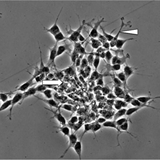
The SH-SY5Y cell line is in the widespread use in experimental neurological studies, including the analysis of neuronal differentiation, metabolism, functions related to neurodegenerative and neuroadaptive processes, neurotoxicity, and neuroprotection.
Background SH-SY5Y cells, the subline of the parental line SK-N-SH cells, are originally established from a bone marrow biopsy of a neuroblastoma patient with sympathetic adrenergic ganglial origin. SK-N-SH were subcloned three times: first to SH-SY, and then to SH-SY5, finally to SH-SY5Y. SH-SY5Y were deposited to the ATCC® in 1970 by June L. Biedler. Once the primary mammalian neurons derived from embryonic central nervous system tissue terminally differentiate into mature neurons, the cells can be no longer propagated. While…
Background SH-SY5Y cells, the subline of the parental line SK-N-SH cells, are originally established from a bone marrow biopsy of a neuroblastoma patient with sympathetic adrenergic ganglial origin. SK-N-SH were subcloned three times: first to SH-SY, and then to SH-SY5, finally to SH-SY5Y. SH-SY5Y were deposited to the ATCC® in 1970 by June L. Biedler. Once the primary mammalian neurons derived from embryonic central nervous system tissue terminally differentiate into mature neurons, the cells can be no longer propagated. While…
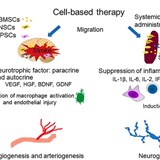
BM-MNCs, the heterogeneous cell mixture, are widely used in cell-based therapy and regenerative medicine, which can promote distinct angiogenic properties, mediate vascular repair, express several cytoprotective growth factors and cytokines and restore pathologically altered genes after ischemic injury. BM-MNCs can be prepared rapidly within a few hours and be collected autologously just prior to administration, which could be advantageous in acute clinical care settings, compared with other cell sources, such as stem cells requiring a period of cell culture before transplantation.
Cell therapy has been identified as an effective method to regenerate damaged tissue. Bone marrow-derived mononuclear cells (BM-MNCs) were first reported on a therapeutic angiogenesis for…
Cell therapy has been identified as an effective method to regenerate damaged tissue. Bone marrow-derived mononuclear cells (BM-MNCs) were first reported on a therapeutic angiogenesis for…
Just 40% of healthcare professionals say they are very aware of patient services, proving a gap exists between professionals and patients. For patients to feel heard, pharma companies should continue prioritizing a patient-centric approach; one that involves patients in a meaningful way throughout the drug development lifecycle.
In a new era of virtual engagement, ensuring that best practices are followed by HCPs and pharma companies is essential to placing patients at the heart of virtual engagement strategies.
Over the past year, millions of people across the globe looked to pharmaceutical companies for hope in the form of a vaccine. The coronavirus pandemic put the life sciences sector in the spotlight more so than ever before as patients continued to make their needs known and said…
Over the past year, millions of people across the globe looked to pharmaceutical companies for hope in the form of a vaccine. The coronavirus pandemic put the life sciences sector in the spotlight more so than ever before as patients continued to make their needs known and said…

The consumers increasingly make their food choices based on criteria such as sustainability and environmental impact. Furthermore, consumers prefer to purchase food products with little to no packaging, ideally from local and social businesses.
clinical nutrition market is to maintain the body in good condition, protect it from adverse effects of the environment and the aging process, change the appearance. The consumers increasingly make their food choices based on criteria such as sustainability and environmental impact. Furthermore, consumers prefer to purchase food products with little to no packaging, ideally from local and social businesses. The demand for dietetic treatment increases, especially in clinics where the demand is often not met due to limited financial resources. Further…
clinical nutrition market is to maintain the body in good condition, protect it from adverse effects of the environment and the aging process, change the appearance. The consumers increasingly make their food choices based on criteria such as sustainability and environmental impact. Furthermore, consumers prefer to purchase food products with little to no packaging, ideally from local and social businesses. The demand for dietetic treatment increases, especially in clinics where the demand is often not met due to limited financial resources. Further…
Decentralised clinical trials (DCTs) have become the new norm for many clinical research professionals since the COVID-19 pandemic hit in 2020. In a survey conducted by Informa Connect in May 2020, 76% of clinical research professionals said that the pandemic was already increasing DCT use in their workload, with 9 out of 10 respondents expecting this to continue in the long-term, even once the initial disruption from the pandemic was over.
Decentralised clinical trials (DCTs) have become the new norm for many clinical research professionals since the COVID-19 pandemic hit in 2020. In a survey conducted by Informa Connect in May 2020, 76% of clinical research professionals said that the pandemic was already increasing DCT use in their workload, with 9 out of 10 respondents expecting this to…
Decentralised clinical trials (DCTs) have become the new norm for many clinical research professionals since the COVID-19 pandemic hit in 2020. In a survey conducted by Informa Connect in May 2020, 76% of clinical research professionals said that the pandemic was already increasing DCT use in their workload, with 9 out of 10 respondents expecting this to…

09-Aug-2021
CROPRIME is a full-service Clinical Research Organisation (CRO) located in the heart of England, providing clinical services from the pre-clinical stages all the way through to post-market surveillance. The company operates globally and has a strong presence in Europe, particularly in Poland, but also in Germany, France, Netherlands, Spain, Italy, and Switzerland.
Introducing CROPRIME CROPRIME is a full-service Clinical Research Organisation (CRO) located in the heart of England, providing clinical services from the pre-clinical stages all the way through to post-market surveillance. The company operates globally and has a strong presence in Europe, particularly in Poland, but also in Germany, France, Netherlands, Spain, Italy, and Switzerland. The company hopes to continue its expansion by…
Introducing CROPRIME CROPRIME is a full-service Clinical Research Organisation (CRO) located in the heart of England, providing clinical services from the pre-clinical stages all the way through to post-market surveillance. The company operates globally and has a strong presence in Europe, particularly in Poland, but also in Germany, France, Netherlands, Spain, Italy, and Switzerland. The company hopes to continue its expansion by…

For biospecimens making their way from donor to industry laboratory, a wide variety of possible routes, events and timelines exist, any of which may have the potential to affect the sample quality. For this reason, it is important for researchers to know the provenance details for all the biospecimens they use. Unfortunately, for industry researchers, this information is often lacking, and this affects the reliability of the resulting research.
Can business interest and reliable and ethical biospecimen procurement coexist? By Robert Hewitt, PhD, Biosample Hub For biospecimens making their way from donor to industry laboratory, a wide variety of possible routes, events and timelines exist, any of which may have the potential to affect the sample quality. For this reason, it is importa…
Can business interest and reliable and ethical biospecimen procurement coexist? By Robert Hewitt, PhD, Biosample Hub For biospecimens making their way from donor to industry laboratory, a wide variety of possible routes, events and timelines exist, any of which may have the potential to affect the sample quality. For this reason, it is importa…

Charnwood Molecular, a leading UK-based pre-clinical discovery CRO servicing the global pharmaceutical and biotechnology market, is pleased to announce the acquisition of the assay development and biological screening provider, Aurelia Bioscience.
The sector-leading expertise and technology development within Aurelia Bioscience will enable and enhance Charnwood’s provision of a world-class integrated drug discovery and development service platform as it continues to build upon its strong foundation in medicinal chemistry, scale-up and process research & development. Aurelia Bioscience is a leading preclinical CRO specialising in bioassay development, pharmacological profiling and compound screening, working in the early stages of the drug discovery pipeline including target identifica…
The sector-leading expertise and technology development within Aurelia Bioscience will enable and enhance Charnwood’s provision of a world-class integrated drug discovery and development service platform as it continues to build upon its strong foundation in medicinal chemistry, scale-up and process research & development. Aurelia Bioscience is a leading preclinical CRO specialising in bioassay development, pharmacological profiling and compound screening, working in the early stages of the drug discovery pipeline including target identifica…
